CuFile С Открытым Исходным Кодом от Nvidia Установит Новый Отраслевой Стандарт Для Хранения Данных на GPU
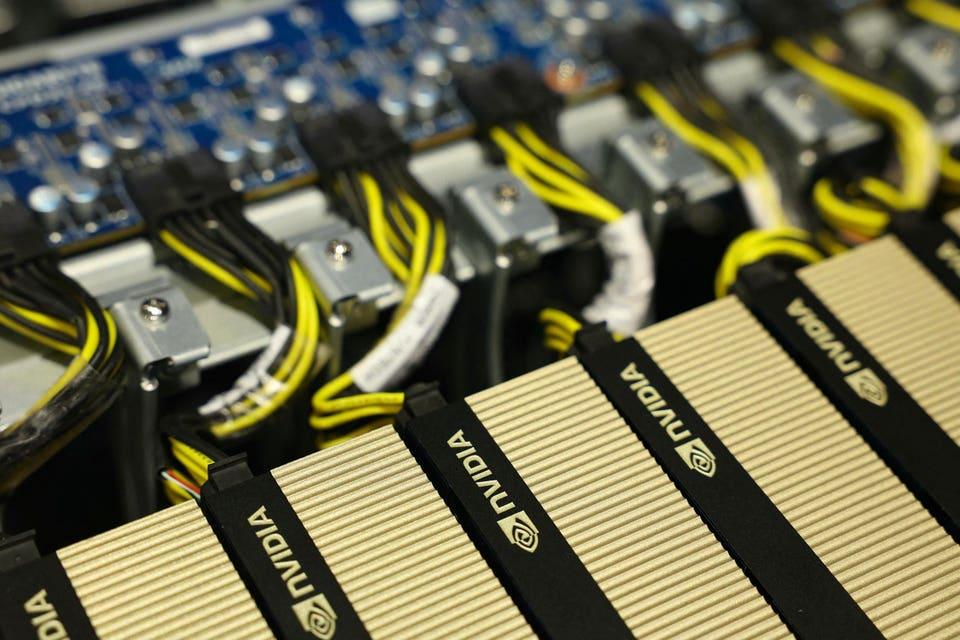
Компания Nvidia представила свой стек хранения данных cuFile с открытым исходным кодом, превратив управляемый графическим процессором доступ к данным в промышленный стандарт. При поддержке Google, Intel и Meta этот шаг позволяет графическим процессорам напрямую управлять запросами на хранение, минуя центральный процессор, и значительно ускоряет передачу данных. Это нововведение, которое теперь называется SCADA, позволяет графическим процессорам создавать собственные запросы к хранилищу, значительно сокращая время простоя и повышая производительность, что продемонстрировал тест Micron на 230 миллионов случайных операций чтения в секунду. Nvidia стремится создать новую основу для инфраструктуры искусственного интеллекта, гарантируя, что ее архитектура графических процессоров останется центральной, заставляя конкурентов внедрять ее программное обеспечение. Стратегический открытый исходный код, аналогичный CUDA, позволяет Nvidia формировать всю экосистему.
Компания Nvidia превратила свой стек хранения данных cuFile в открытый стандарт, поддерживаемый Google, Intel и Meta, превратив управляемый графическим процессором доступ к данным из запатентованной функции в новый базовый уровень отрасли. Компания представила API‑интерфейсы cuFile с открытым исходным кодом и полный пакет программного обеспечения для хранения данных во вторник на конференции Future of Memory и Storage conference в Санта—Кларе, разместив код в новой организации на GitHub под названием Accelerated IO Special Interest Group, где Google, Intel и Meta теперь присоединяются к Nvidia в качестве разработчиков-основателей - несмотря на то, что каждый из них разрабатывал свой собственный код. свой собственный кремниевый искусственный интеллект.
cuFile позволяет графическому процессору считывать данные из хранилища и записывать их в него напрямую, вместо того чтобы ждать, пока центральный процессор извлечет данные и передаст их дальше. Nvidia устанавливает стандарт передачи данных на процессор, потому что компания, которая разрабатывает стандарт, формирует то, на основе чего все остальные разрабатывают.
Чипы стали настолько быстрыми, что передача данных на них имеет такое же значение, как и вычисления, которые они выполняют после их поступления. Графический процессор, простаивающий в ожидании информации, является самым дорогим оборудованием в мире, и покупатели считают, что это снижает отдачу от каждой устанавливаемой стойки.
Как Nvidia добилась успехаNvidia работает над этим уже много лет. Система хранения данных GPUDirect,which shipped in 2021, took the CPU out of the data path so bytes could move by direct memory access between a drive and GPU memory.
The control path stayed where it was. Host software still decided what to fetch and issued every request, and the GPU received data rather than asking for it.
What SCADA ChangesTuesday’s announcement moves that control path onto the GPU. Nvidia calls the framework SCADA, for scaled accelerated data access, and it lets the GPU build its own storage requests and handle its own completions, keeping hundreds of thousands of operations in flight at once. That is the same technique a GPU already uses to hide memory latency, aimed at storage. Jason Hardy, Nvidia’s vice president of storage technology, said the result is data pulled from storage in microseconds.
The Micron BenchmarkMicron supplied the measurement. A single server hit 230 million random reads per second at 512 bytes each, using 44 of its Gen6 solid-state drives behind three PCIe switches and driven by three H100 GPUs. That is roughly 95 percent of what those drives are rated to deliver. Pushing that volume through host software would have taken dozens of CPU cores just to submit requests and process completions. The server’s CPU sat essentially idle.
Why Small Reads Break CPUsSmall reads are the hard case. Large sequential transfers were never the problem, because the per-request overhead disappears into the size of the transfer. At 512 bytes the fixed cost of each request dominates, and the CPU runs out of capacity before the drives do. Nvidia introduced context memory storage hardware at the same event, built for workloads that need to reach past GPU memory into flash.
Why Open-Sourcing MattersNvidia’s stated reason for open-sourcing this rather than keeping it inside CUDA is security and Linux interoperability. Letting an application talk to a drive directly requires careful privilege separation, handled with standard Linux mechanisms so each application reaches only the storage it has been approved to touch. That is hard to make credible inside a closed stack.
The strategic reason sits on top of it. A standard becomes a standard when the companies that compete with you adopt it. Intel is a founding maintainer of an interface designed partly to route around the x86 processor Intel sells. Google and Meta both build their own AI accelerators. Their names on the project turn it into an industry specification rather than an Nvidia feature, and an industry specification is what storage vendors design products against.
Storage-Next And Industry AlignmentNvidia launched Storage-Next alongside the code, an initiative that now spans more than 40 storage and flash makers, controller vendors, cooling specialists, and standards bodies, with DDN, Kioxia, and Micron among the named participants. The interface all of them are building toward assumes a massively parallel processor issuing its own requests, which describes a GPU before it describes anything else.
The Strategic Trade-OffHanding cuFile to a consortium destroys something Nvidia owned. The company spent years building that software, shipped it as a reason to buy Nvidia hardware, and has now published it for anyone to use, including three maintainers who sell competing silicon. Companies under pressure charge for an asset like that while they still can.
The logic is the one Keyser Söze uses in The Usual Suspects. He destroys what his enemies were counting on holding over him, in front of them, so they understand there is nothing left to bargain with. Jensen Huang has run a version of that play for most of his career, and CUDA is the proof it works. Nvidia made its programming layer free and ubiquitous, and the field ended up thinking in it. The competitors hoping the software layer was Nvidia’s pressure point just watched the company hand that layer over and invite them to help maintain it.
The Pattern ContinuesNvidia keeps finding the bottleneck sitting next to its chips, writing the software that removes it, and then giving that software to the industry. It can afford to give the pieces away because none of them is what holds the position.
>