Что такое Гиперскейлеры? Компании, стимулирующие бум инфраструктуры Искусственного Интеллекта
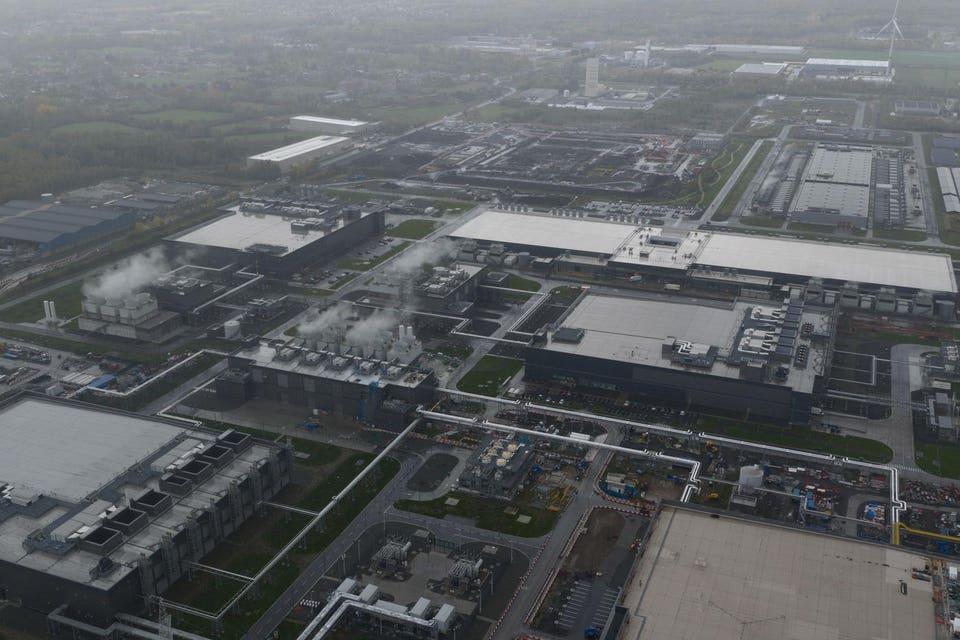
Крупнейшие американские гипермаркетинговые компании намерены инвестировать более 700 миллиардов долларов в технологии искусственного интеллекта к 2026 году. Такие компании, как Amazon, Microsoft, Google, Meta и Oracle, подпитывают масштабный инфраструктурный бум. Эти технологические гиганты управляют огромными центрами обработки данных, необходимыми для предоставления повседневных цифровых услуг и передовых моделей искусственного интеллекта. Хотя их огромные масштабы обеспечивают доступ к передовым вычислениям, они также создают значительную нагрузку на физические ресурсы, такие как электросети и водоснабжение. Некоторые сообщества отказываются от реализации определенных проектов. Например, в Тусоне, штат Аризона, городской совет единогласно проголосовал в 2025 году за отказ от проекта Project Blue по строительству центра обработки данных, связанного с Amazon. Вопрос о том, где и как эти компании будут строить, становится предметом все более публичных обсуждений, поскольку продолжает строиться все больше центров обработки данных.
В 2026 году крупнейшие американские гиперскейлеры планируют потратить более 700 миллиардов долларов на вычисления, лежащие в основе искусственного интеллекта, что почти вдвое больше, чем они потратили годом ранее. Крупнейшие из них - это известные вам компании: Amazon, Microsoft, Google, Meta и Oracle. Они управляют огромным количеством центров обработки данных: зданиями без окон, заполненными серверами, которые обучают модели искусственного интеллекта и запускают онлайн-сервисы, которыми вы пользуетесь каждый день. Эти расходы стоят во многих заголовках сегодняшних газет: о гигантских новых кампусах, напряжении в электросетях, гонке за передовыми чипами. Это делает эти компании движущей силой всего инфраструктурного бума.
Вы также обращаетесь к ним десятки раз в день, сами того не замечая, каждый раз, когда транслируете шоу, нажимаете на карточку при оформлении заказа, создаете резервную копию фотографии или задаете вопрос чат-боту. А то, где они строят и сколько энергии используют, теперь имеет значение для вашего города, ваших счетов и экономики.
Что такое Гиперскейлер?Гиперскалер - это компания, которая управляет вычислениями в огромных масштабах, либо сдавая эти мощности в аренду клиентам, либо используя их для обеспечения своих собственных сервисов. Крупнейшие компании управляют глобальными центрами обработки данных, миллионами серверов и используют программное обеспечение для управления ими как единой системой.
Слово "гиперскалер" отражает как размер, так и метод. Гиперскейлеры используют стандартизированное оборудование, автоматизируют рутинную работу и увеличивают пропускную способность большими блоками, а не по одной стойке за раз. Центр обработки данных - это здание; гиперскейлер управляет многими из них, независимо от того, владеет ли он сайтами или арендует пространство. Облачные технологии и hyperscale часто используются как синонимы, но это не одно и то же: облако - это услуга, которую вы арендуете, в то время как hyperscale описывает размер и модель работы, стоящие за ней. Некоторые гиперскейлеры продают эти возможности как облачные, в то время как другие в основном используют их для своих собственных продуктов, от поиска до социальных приложений и моделей искусственного интеллекта. Их объединяет масштабируемость, автоматизация и деньги, позволяющие продолжать покупать чипы и мощность.
Who Are The Leading Hyperscaler Companies?The leading hyperscalers are Amazon, Microsoft, Google, Meta, Oracle and Apple in the United States, along with Alibaba and Huawei in China. Rankings shift depending on whether you measure cloud revenue, data-center capacity, or services run at scale.
The three biggest cloud platforms, Amazon Web Services, Microsoft Azure and Google Cloud, together held 63% of the global market in the second quarter of 2026. China’s leaders do most of their business at home and hold far smaller shares in the West.
The field stays small for a simple reason: only companies that can spend heavily on land, power and specialized chips can compete. Most have been at it for years. Amazon launched AWS in 2006, Google and Microsoft followed by 2010 and Oracle and Huawei scaled up later.
Amazon Web Services (AWS)AWS is the largest cloud platform in the world, holding about 28% of the global market in the second quarter of 2026. It launched in 2006 and helped popularize the idea of renting computing by the hour.
It competes on breadth, with hundreds of services from storage to machine learning and it designs its own chips like Trainium and Inferentia to depend less on outside suppliers. That scale cuts both ways. Because so much of the internet runs on AWS, its failures ripple outward: an October 2025 outage in its Northern Virginia region took down apps from Snapchat to Slack for more than 15 hours.
Microsoft AzureAzure sits second, at about 20% of the global market in the same quarter and it’s the default for many businesses already running Microsoft software. It became generally available in 2010.
Microsoft’s advantage is the bundle: it sells Windows, Office and Azure together, then adds AI assistants like Copilot on top. Its early, multibillion-dollar partnership with OpenAI made Azure a leading home for generative AI. The two revised that deal in 2026: Microsoft stays OpenAI’s primary cloud partner, but OpenAI can now run its products on other providers too.
Google CloudGoogle Cloud runs third, at around 15% of the global market and it’s been gaining share. It grew out of the infrastructure Google built to run search.
Its edge is what it knows: years of search data and deep AI research. It designs its own AI accelerators, called TPUs, and builds the Gemini family of models. That homegrown silicon gives it an alternative to outside chip suppliers, a useful edge as AI training costs climb.
MetaMeta builds hyperscale infrastructure for itself, not to rent out. Its data centers run Facebook, Instagram and WhatsApp, and its fast-growing AI work is driving a rapid expansion.
It leans on that scale for its own products and its open-weight Llama models, which it releases under its own license. The build-out has raised questions on Wall Street: a single roughly $50 billion campus prompted debate over whether the AI boom is overbuilt, even as investors cheered.
OracleOracle built Oracle Cloud Infrastructure (OCI) on top of its database and business-software roots, launching it in 2016. It’s smaller than the big three but growing quickly as demand for AI computing rises.
The company has bet on AI training capacity. It’s a central partner in the Stargate initiative, the OpenAI- and SoftBank-backed effort to build gigawatts of AI computing, and it has signed large contracts to supply that horsepower. The strategy takes enormous capital.
AppleApple counts as a hyperscaler because it runs enormous data-center infrastructure for services like iCloud, the App Store, Apple Music and Apple Intelligence. Industry analysts include Apple among the major hyperscale operators.
The difference is that Apple isn’t a public-cloud provider like AWS, Azure or Google Cloud. Its infrastructure mainly supports Apple’s own products, and it also leans on outside partners: the company recently described expanding Private Cloud Compute through Google Cloud.
Alibaba CloudAlibaba Cloud is China’s largest cloud provider, with 33% of the mainland market in the first quarter of 2025. It launched in 2009 to serve Alibaba’s online shopping business.
The company builds its own Qwen AI models and supplies much of the computing behind China’s AI push. Most of its cloud business stays in China, with only a small footprint in the U.S. and Europe, a split that mirrors the wider divide between the American and Chinese technology worlds.
Huawei CloudHuawei Cloud was the second-largest cloud provider in China in the first quarter of 2025, with 18% of the mainland market. It launched in 2017.
Its distinctive asset is its own Ascend AI chips, which matter more as U.S. export controls restrict China’s access to advanced Western processors and chipmaking tools. Building both the chips and the cloud lets Huawei depend less on outside suppliers, and it has made the company central to China’s push for technological self-sufficiency.
Why Hyperscalers Matter More Than EverHyperscalers matter more than ever because AI runs on their machines, and demand for that computing keeps climbing. Training and running modern models takes far more power and specialized hardware than ordinary software, and only a handful of companies can supply it at this scale.
Their reach runs through much of the digital economy. Hyperscalers rent out the cloud that companies use instead of buying their own servers. They also stream video, clear payments, run cybersecurity tools and now train the AI models reshaping whole industries. The spending alone is now a macroeconomic force: Moody’s expects the largest U.S. hyperscalers to spend more than $700 billion in 2026, up from about $387 billion a year earlier, most of it on data centers and AI. That's enough to sway stock markets, electricity prices and industrial policy.
How Hyperscalers Are Reshaping The Future Of TechnologyHyperscalers are reshaping technology by turning advanced computing into something you rent rather than build, which lowers the bar for launching AI products. That same growth is straining the physical world around them, from power grids to water supplies.
For businesses and consumers, the payoff is speed: a small team can rent the same computing as a giant, and new AI features can reach billions of users overnight.
The strain shows up in physical infrastructure. Big campuses can draw hundreds of megawatts, and the real bottleneck is now power, not chips, as operators wait years for grid connections and high-voltage transformers. Water for cooling has become a flashpoint too. A single large campus can pull millions of gallons a day, as much as a town of tens of thousands of people, and most of it evaporates instead of flowing back into the local supply. Google’s data centers in The Dalles, Oregon used about 355 million gallons in 2021, close to a third of the whole city's water. The figure stayed hidden until a local newspaper forced its release in court, over the objections of city officials who had helped Google keep it secret.
Communities are pushing back, and local opposition has already stalled billions in planned projects. In Tucson, Arizona, the city council voted unanimously in 2025 to reject Project Blue, a data-center campus tied to Amazon, after residents balked at how much water and power it would use. Where and how these companies build is becoming a public negotiation, not just a corporate decision.
Strip away the branding and a hyperscaler is simple: computing at a scale almost no one else can match. A handful of them now sit beneath much of the cloud, the internet and the AI boom. They make modern digital life possible, and their appetite for power, water and land reshapes communities and grids.
>