Цифровая зависимость Европы растет — США и Китай вырываются вперед
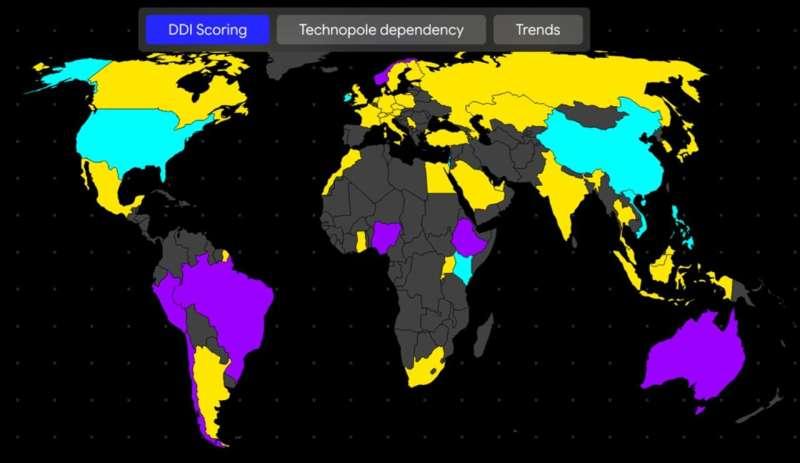
Зависимость от цифровых технологий в Европейском союзе продолжает расти, несмотря на все призывы к укреплению цифрового суверенитета. В период с 2010 по 2023 год "Индекс цифровой зависимости" Европы (DDI) вырос на 0,5 процентных пункта, в то время как Китай снизил свою зависимость почти на 11 процентных пунктов, а США - на 6 процентных пунктов.
Главная слабость заключается в цифровых платформах, где европейские страны почти полностью зависят от иностранных провайдеров. Об этом говорится в политическом исследовании, проведенном Институтом Vodafone и Центром передовых исследований в области безопасности, стратегии и интеграции (CASSIS) при Боннском университете.
Согласно новому исследованию, проведенному Институтом Vodafone и Боннским университетом, несмотря на многочисленные инициативы по укреплению технологической автономии, в период с 2010 по 2023 год Европа стала более зависимой от цифровых технологий из—за рубежа. Политическое исследование "Правильная постановка стратегических приоритетов — на пути к созданию основы для снижения цифровой зависимости" является результатом многолетнего сотрудничества между Институтом Vodafone и Центром передовых исследований в области безопасности, стратегии и интеграции (CASSIS) Боннского университета.
Разработанный Боннским университетом "Индекс цифровой зависимости", на котором основано исследование, сравнивает 51 страну, включая 16 европейских, по четырем параметрам: торговля товарами в области информационно—коммуникационных технологий (ИКТ), торговля услугами в области ИКТ, цифровые платформы и патенты на ИКТ. В исследовании показано, как ежегодно менялась зависимость стран от зарубежных цифровых технологий в период с 2010 по 2023 год.
От умеренного до высокого уровня цифровой зависимостиВ целом за этот период цифровая зависимость Европы увеличилась примерно на 0,5 процентных пункта. Для сравнения, Китай сократил свою зависимость почти на 11 процентных пунктов, а Соединенные Штаты - на 6 процентных пунктов. На протяжении рассматриваемого периода европейские страны неизменно демонстрировали умеренный или высокий уровень цифровой зависимости. Их наибольшая уязвимость связана с цифровыми платформами, где европейские страны почти полностью зависят от иностранных провайдеров.
В период с 2010 по 2023 год наибольшее увеличение цифровой зависимости на процентный пункт было зафиксировано в Финляндии (13,7), Швеции (7,2), Норвегии (6,4), Эстонии (3,9) и Франции (3,1). Самый резкий спад в Европе наблюдался в Сербии (-17,3), Чехии (-5,5), Польше (-4,2) и Великобритании (-3,5). Европа также оставалась в значительной степени зависимой от иностранных патентов в области ИКТ. Это ограничивает его способность извлекать выгоду из экономических и стратегических выгод от технологических инноваций.
Joakim Reiter, Vodafone Group chief external and corporate affairs officer, said, "Europe has spent years deliberating on digital sovereignty, but the evidence shows that its underlying dependence remains high. While the United States and China have strengthened their positions, Europe has fallen slightly further in the wrong direction.
"Europe has significant industrial, research and engineering strengths, but it needs to decide where those strengths can make the greatest difference. That means setting clear priorities, coordinating action across borders and sustaining investment beyond individual political cycles."
No uniform dependency profileThe study shows that European countries do not have a uniform dependency profile. They exhibit different capabilities and vulnerabilities. Therefore, a uniform Europe-wide policy does not appear advisable. Furthermore, the study shows that previous political efforts to achieve greater technological autonomy were not ambitious enough.
Maximilian Mayer, professor of international relations and global politics of technology at the University of Bonn, said, "Although European governments have implemented various policies and measures to foster digital sovereignty, their efforts have not been ambitious enough. One of the key problems is clearly the lack of strategic priorities for increasing digital capabilities and addressing digital dependencies."
Mayer's CASSIS colleague Dr. Laura Mahrenbach adds, "Setting priorities isn't enough on its own. To achieve those priorities, Europe needs to be smart in implementing digital resilience measures and engage more with international strategic partners."
Four policy pathwaysThe researchers identify four evidence-based policy pathways, some of which can be combined:
• Building indispensable positions in the supply chain: Strengthening Europe's existing industrial and technological capacities.
• Creating a European technology powerhouse: Making substantial investments in a competitive European approach, including platforms, infrastructure, patents and homegrown technology companies.
• Addressing the most serious vulnerabilities: Identifying and eliminating critical technological bottlenecks, particularly where security and essential government functions are at stake.
• Diversification: Reducing excessive dependence on a small number of foreign suppliers by expanding European capabilities and forging new international technology partnerships.
The study recommends that European policymakers agree on common strategic priorities as soon as possible. They should also coordinate regulation, innovation, investment and procurement across national borders and align short-, medium- and long-term measures. It is also crucial to launch a long-term public debate on the benefits of greater digital resilience.
Website for the "Digital Dependence Index"In addition to the study, an interactive website for the "Digital Dependence Index" allows users to track changes in digital dependencies in detail. Policymakers, researchers, businesses and the general public can use it to compare countries and regions, examine changes in country profiles over time and view the underlying data. It also includes an AI-powered tool designed to help users navigate the dataset and understand its political context.
>