Как моделирование меняет современное производство и разработку продуктов
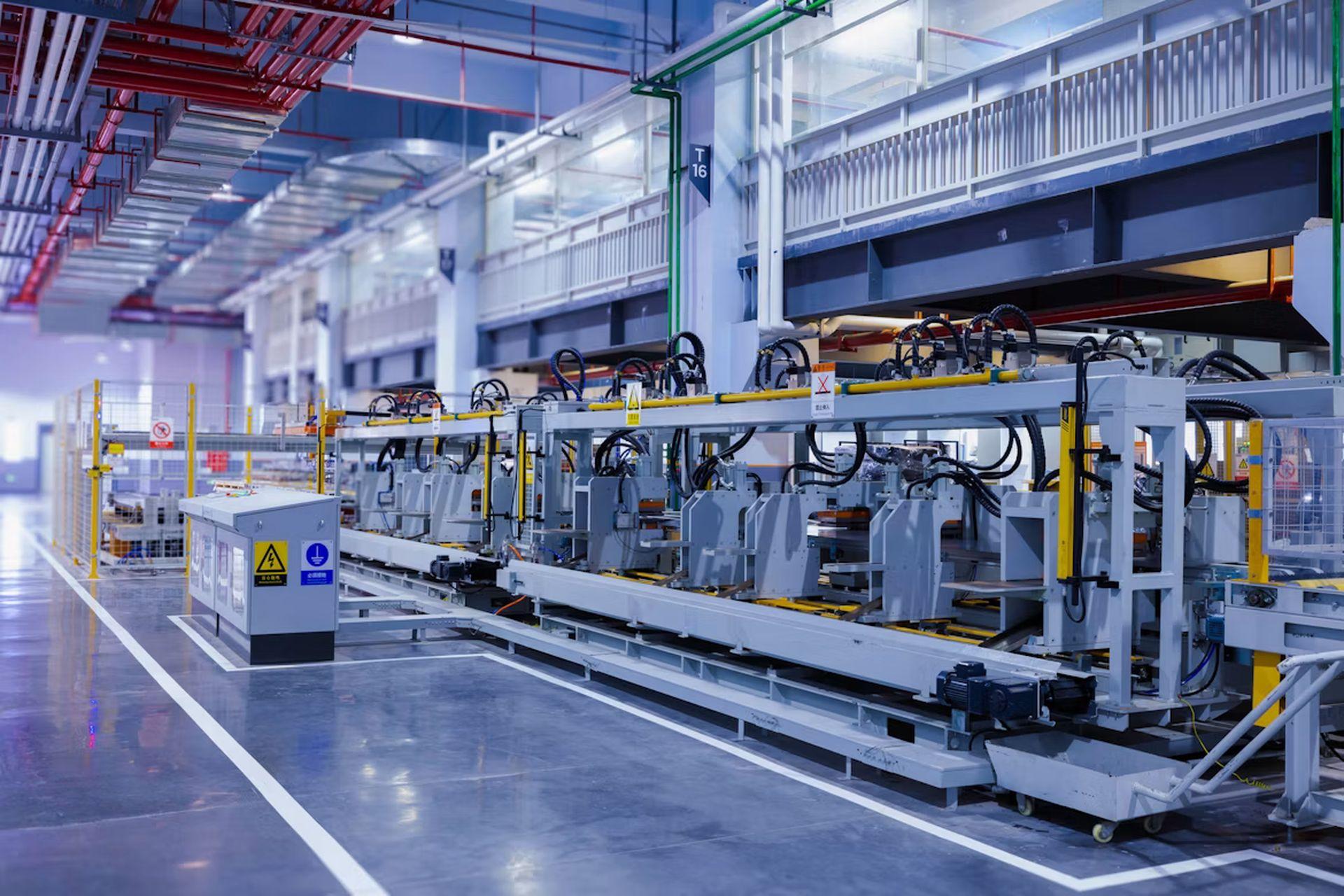
Современное производство выходит за рамки физических проб и ошибок. Производственные группы могут использовать цифровое моделирование процесса литья под давлением для оценки дизайна, моделирования производственных сценариев и выявления потенциальных проблем до начала физического производства. Этот переход к проектированию на основе имитационного моделирования меняет подход компаний к разработке продукта, технической проверке и управлению производственными рисками.
Что такое производственное моделирование?Производственное моделирование использует вычислительные модели для представления того, как продукт, материал, машина или производственный процесс будут вести себя в определенных условиях.
В отличие от обычной 3D-модели, которая в основном описывает геометрию изделия, имитационная модель может показать, как продукт или производственный процесс могут реагировать на такие переменные, как температура, давление, свойства материала, механические нагрузки или параметры процесса.
Это делает моделирование полезным для изучения потенциальных результатов перед началом физического производства. Инженеры могут изменять выбранные параметры, сравнивать различные сценарии и выявлять потенциальные проблемы, в то время как дизайн по-прежнему относительно легко поддается изменениям.
Цель не в том, чтобы создать идеальную цифровую копию реальности. Вместо этого моделирование предоставляет дополнительные доказательства, которые могут поддержать инженерные решения и снизить неопределенность в процессе разработки.
От физических прототипов до виртуального тестирования.Физические прототипы остаются важной частью разработки продукта, но они не всегда являются наиболее эффективным способом изучения всех вопросов проектирования.
Для создания прототипа требуются материалы, оборудование, время на разработку и часто специальный производственный цикл. Если обнаруживается проблема, может потребоваться еще одна итерация. Виртуальное тестирование может продвинуть некоторые исследования на более ранних этапах процесса разработки.
Вместо физического создания каждого варианта дизайна инженеры могут сначала оценить выбранные варианты в цифровом формате. Это может помочь им определить, какие конфигурации заслуживают дальнейшего физического тестирования.
Таким образом, моделирование может помочь командам:
- оценить варианты дизайна до того, как будет завершена разработка производственного оборудования;
- выявляйте потенциальные производственные проблемы на ранней стадии;
- сравните различные условия процесса;
- изучите влияние изменений материала или геометрии;
- сократите количество ненужных физических повторений.
Цель не в том, чтобы заменить физическое тестирование. Скорее, моделирование может сделать физическое тестирование более целенаправленным, помогая инженерам определить, какие вопросы требуют проверки в реальных условиях.
Почему при разработке продукта важны сроки?Одно из важнейших преимуществ моделирования заключается в том, что оно позволяет выявить потенциальные проблемы до того, как они превратятся в дорогостоящие физические проблемы.
Изменение дизайна, внесенное на этапе цифровой разработки, может потребовать относительно небольших усилий. Одно и то же изменение, обнаруженное после изготовления оснастки, может повлечь за собой технические изменения, дополнительную механическую обработку, производственные испытания, задержки или изменения в связанных компонентах.
This creates an important principle of simulation-driven development: the earlier a potential problem is identified, the more opportunities engineers have to address it before costs increase.
Simulation can therefore influence decisions about product geometry, materials, tooling, process parameters, and manufacturing methods while those decisions can still be changed.
Connecting product design and manufacturingA product can meet its functional requirements and still be difficult to manufacture consistently. Geometry, material properties, tolerances, thermal behavior, tooling, and production parameters can interact in ways that are difficult to evaluate from design geometry alone.
Simulation provides a way to examine these relationships before production begins. This is particularly relevant when manufacturing conditions can affect product quality, dimensional stability, mechanical performance, or surface characteristics.
By considering manufacturing requirements earlier, engineering teams can identify potential conflicts between product requirements and production constraints. Simulation can also improve communication between product designers, manufacturing engineers, tooling specialists, and other technical teams.
Instead of addressing manufacturing problems only after a design has been finalized, teams can consider production requirements during earlier development decisions.
Simulation, virtual testing, and digital twinsSimulation, virtual testing, and digital twins are related concepts, but they are not interchangeable.
Manufacturing simulation models the expected behavior of a product or process under defined conditions.
Virtual testing uses digital models to evaluate specific scenarios that might otherwise require physical experiments.
A digital twin is a digital representation of a physical object, process, or system that can be connected to information from its real-world counterpart. Depending on the application, it can support monitoring, prediction, simulation, and optimization.
A simulation can exist before a product is manufactured. A digital twin, by contrast, is generally associated with an existing physical asset or process and may incorporate operational data throughout its lifecycle.
The distinction becomes increasingly relevant as manufacturers combine engineering models with real-world production data. Simulation can provide predictive insight, while operational data can help improve understanding of how systems behave in practice.
Where simulation creates business valueThe value of simulation is not limited to technical analysis. It can also influence the economics and organization of product development.
Manufacturers face pressure to shorten development cycles, maintain consistent quality, use resources efficiently, and respond to changing market requirements. More complex products can also create additional interactions between design decisions and manufacturing processes.
Simulation allows engineers to investigate more scenarios before physical resources are committed. Potential benefits include earlier identification of design and manufacturing risks, fewer unnecessary development iterations, more informed engineering decisions, and better communication between design and production teams.
However, these benefits are not automatic. The value of simulation depends on the quality of the underlying models and data, the relevance of the assumptions, and the ability of engineers to interpret the results correctly.
What are the limitations of manufacturing simulation?Simulation does not reproduce reality perfectly. Every model relies on assumptions, equations, material properties, boundary conditions, and input data.
If relevant information is inaccurate or incomplete, the resulting prediction may also be unreliable. Models may also simplify physical phenomena that are difficult to represent computationally.
For this reason, simulation should support engineering judgment rather than replace it. A robust development process can combine digital analysis with physical validation and production knowledge.
Simulation can identify patterns and potential risks, while physical experiments can help confirm whether predicted behavior corresponds to real-world performance.
How AI could extend simulation-driven manufacturingArtificial intelligence is another technology that could extend simulation-driven manufacturing. AI can process large volumes of simulation results, identify patterns, and help engineers explore combinations of variables that would be difficult to evaluate manually.
Simulation can also provide a controlled digital environment for testing algorithms before they are deployed in physical production systems. This can be valuable when real-world experimentation is expensive or disruptive.
AI does not make simulation obsolete. Physics-based models remain important for representing relationships within engineering systems, while AI can help analyze results, identify patterns, or accelerate the exploration of possible scenarios.
The combination of simulation, engineering data, and AI could support increasingly automated and data-driven manufacturing workflows.
The future of simulation-driven product developmentThe next phase of digital manufacturing is likely to involve closer integration between product design, simulation, operational data, and physical production.
Rather than treating simulation as a standalone engineering activity, manufacturers can incorporate it into broader development workflows. Designs can be evaluated digitally, manufacturing implications can be considered earlier, and information from physical production can inform future development decisions.
This creates a more continuous connection between product development and manufacturing.
The larger change is not simply the ability to create increasingly detailed digital models. It is the ability to investigate engineering questions earlier, when there is still time to influence the outcome.
Simulation as a core engineering capabilitySimulation is becoming an increasingly important part of modern engineering because it changes when and how manufacturers investigate uncertainty.
Digital models allow teams to explore potential outcomes before waiting for a physical prototype or production run to reveal a problem. This does not eliminate the need for engineering expertise or physical validation, but it provides another layer of evidence before significant resources are committed.
As manufacturing becomes more connected and data-driven, simulation can serve as a bridge between product design and production. Its role is likely to expand from specialized analysis toward a broader engineering capability that supports earlier risk identification, faster experimentation, and more informed manufacturing decisions.
Featured image credit
>