Внутренние данные Vulcan Materials и преобразование с помощью искусственного интеллекта
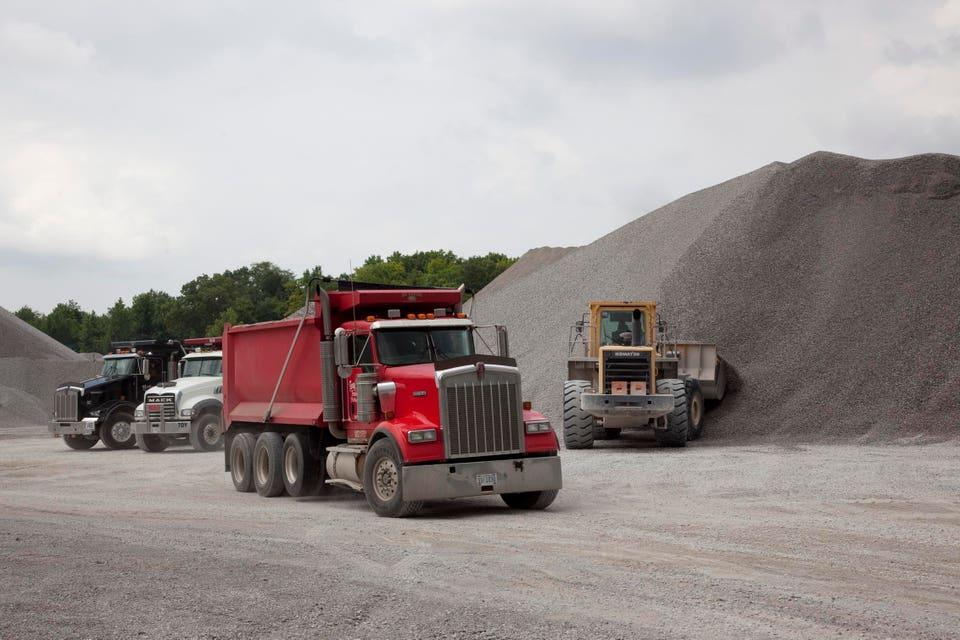
Компания Vulcan Materials, ведущий производитель строительных материалов, проводит значительные технологические преобразования под руководством директора по информационным технологиям Кшиштофа Солтана. Прежде чем внедрять передовые технологии, такие как искусственный интеллект, компания Soltan уделяет приоритетное внимание упрощению бизнес-процессов и консолидации систем в коммерческих, финансовых, кадровых подразделениях и цепочках поставок. Эта многолетняя инициатива направлена на изменение существующих рабочих процессов, снижение сложности и создание надежного управления данными, что имеет решающее значение для эффективности ИИ. Vulcan фокусирует свои усилия в области ИИ на возможностях с высокой отдачей, прагматично принимая решение о создании или покупке решений. Компания также готовится к повышению уровня автоматизации и автономности операций в следующем десятилетии, что в конечном итоге позволит использовать технологии для расширения возможностей сотрудников и укрепления своей основополагающей роли в развитии инфраструктуры.
Компания Vulcan Materials производит материалы, необходимые для строительства зданий. Его заполнители используются на дорогах, мостах, зданиях и других сооружениях по всей территории Соединенных Штатов. Компания, выручка которой в 2025 году составила около 7,8 миллиарда долларов, управляет более чем 400 агрегатными заводами в 24 штатах и отгрузила в прошлом году более 220 миллионов тонн агрегатов.
"Если вы находитесь в здании, на дороге, на мосту или где-либо еще, сделанном из бетона или асфальта, то, скорее всего, там находится наш продукт", - сказал директор по информационным технологиям Кшиштоф Солтан.
Став директором по информационным технологиям в 2021 году, Солтан руководил многолетними преобразованиями, охватывающими коммерческие операции, финансы, человеческие ресурсы, цепочку поставок, кибербезопасность и обработку данных. Хотя облачные платформы, искусственный интеллект и автоматизация являются важными компонентами этой работы, Солтан не определяет свою роль исключительно с помощью технологий. "Прежде всего, я рассматриваю себя и свою роль как делового партнера для всех сотрудников компании", - подчеркнул он. "Я также думаю о своей роли как о проводнике изменений в компании с помощью технологий, который рассказывает о том, что возможно".
Упрощение бизнеса перед внедрением искусственного интеллекта
Трансформация Vulcan началась с сосредоточения внимания на коммерческих и маркетинговых возможностях. Сроки были выбраны в соответствии с инициативой компании Vulcan Way of Selling, в то время как у организации были как импульс, так и готовность к изменениям. Цель программы заключалась в том, чтобы помочь продавцам проводить больше времени с клиентами и сократить время на выполнение административной работы, одновременно создавая базу данных для более сложной аналитики и искусственного интеллекта.
Солтан и его команда теперь применяют уроки, извлеченные из этой работы, для более масштабной трансформации бэк-офиса, охватывающей финансы, управление персоналом и цепочку поставок. Цель состоит не только в том, чтобы перенести существующие процессы в облако. Компания Vulcan использует переходный период, чтобы усовершенствовать эти процессы, снизить ненужную сложность и снабдить сотрудников более совершенными инструментами.
По словам Солтана, основное внимание было уделено модернизации возможностей, переходу в облако и использованию SaaS-платформ, а также упрощению и усложнению каждого процесса одновременно. Это важное различие. Замена старой системы без пересмотра методов ее работы может привести к сохранению неэффективности в более современной технической среде.
System consolidation is therefore a central element of Vulcan’s strategy. "My team will tell you, everywhere I turn around, I talk about data first," Soltan underscored. "Less systems, less to maintain, less to integrate, less to train, will result in more value."
Treating Data Governance as a Business Discipline
Vulcan’s emphasis on simplification is directly connected to its AI ambitions. Reducing the number of systems can improve data consistency and make it easier to establish a trusted view of the business. Yet Soltan emphasized that improving data at the point of migration is not enough. Its quality must be actively maintained.
"[AI] fundamentally relies on really good data," he said. "All companies have lots of data, but we have good data, and we will have even better data as time goes on."
That requires clear accountability across the enterprise. Vulcan has established a master data governance program that defines business ownership, identifies data stewards and gives the technology organization responsibility for managing, governing and monitoring the underlying information. What began as part of the transformation program has become part of the company’s operating culture.
"This is hard, but it’s critical," Soltan acknowledged. Establishing governance involves more than selecting tools or creating policies. It requires leaders to assign ownership, resolve disagreements and educate employees about why consistent data matters.
Talent represents another part of the foundation. Vulcan recruited a new data leader, built cross-functional expertise and continues to combine external hiring with the development of existing employees. "Nothing happens without people," Soltan said. "We’re constantly upskilling our existing talent to ensure that the data is a strategic asset for Vulcan Materials."
Concentrating AI on the Biggest Opportunities
Vulcan has used machine learning, analytics and other forms of AI since before generative AI became a boardroom priority. In its operations, the company has standardized capabilities that apply AI to improve how it produces finished materials. Its commercial transformation has also created a stronger base of information upon which new AI applications can be built.
Soltan is now exploring generative and agentic AI, including through an employee hackathon focused on solving real business problems. However, he is wary of allowing a proliferation of experiments to substitute for enterprise impact.
"What we are focused on is identifying those few big needle-mover opportunities and driving that use of AI for those, versus trying to solve a lot of little problems," he said. Operations, commercial activities and back-office functions all offer potential, but investments must be prioritized according to their value.
The company takes a similarly pragmatic approach to buying versus building AI. If a useful capability is already embedded in an enterprise platform, Vulcan will generally begin there. "Why reinvent the wheel?" Soltan asked. Commodity processes rarely warrant proprietary development.
Vulcan is more likely to build when an application can create competitive advantage, incorporates valuable intellectual property or addresses a need unique to the company and its industry. In other cases, it may combine an existing platform with custom components. "We always try to apply what works best for Vulcan Materials," he highlighted.
Preparing for More Autonomous Operations
Over the next five to 10 years, Vulcan expects automation to play a larger role in its operations. Progress will depend not only on technical maturity but also on cybersecurity, risk management and the organization’s readiness for change. A technology that performs well in an experiment may not yet be supportable at scale in a rugged operational environment.
Autonomous mobility is one example. Quarry operations present different challenges than public roads, which have lanes, traffic signals and other predictable features. Physical AI will need to function safely around heavy equipment in far less structured environments.
Soltan also monitors human-agent collaboration, AI-assisted software development and AI at the edge. Processing data close to equipment could reduce latency and dependence on centralized data centers while enabling faster operational decisions.
Across these possibilities, his approach remains grounded in business value and workforce enablement. The purpose of automation is not simply to remove tasks, but to give employees the capacity to concentrate on work that matters more. "How will we enable our employees to focus on things that add even more value?" Soltan asked.
For Vulcan, that question ties the transformation together. Modern platforms create opportunities for simplification. Simplification improves data. Trusted data makes AI more useful, and AI can give employees new ways to improve a business that quite literally provides the foundation for much of the country’s physical infrastructure.
Peter High is President of Metis Strategy, a business and IT advisory firm. He has written three bestselling books, including his latest Getting to Nimble. He also moderates the Technovation podcast series and speaks at conferences around the world. Follow him on X @PeterAHigh.
>