Инвестиции в Центры Обработки Данных с Искусственным Интеллектом могут Достичь $7 Трлн К 2030 Году: Кто выиграет?
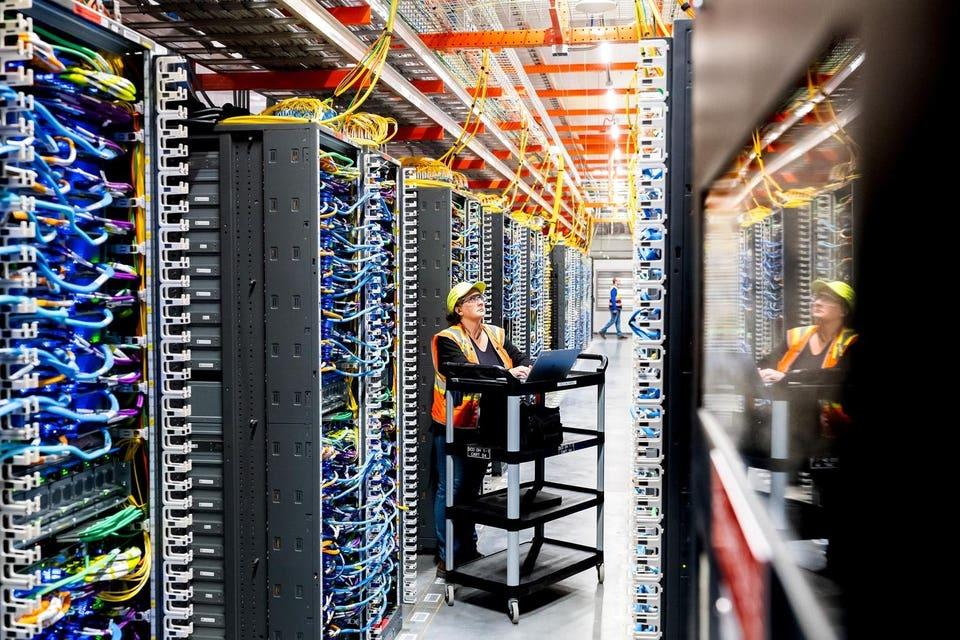
Бум искусственного интеллекта приведет к тому, что к 2030 году глобальные инвестиции в центры обработки данных составят 7 трлн долларов, а к 2027 году гиперскейлеры выделят более 1,3 трлн долларов. Этот беспрецедентный рост энергопотребления создает серьезную проблему, поскольку к 2037 году центры обработки данных будут потреблять 38% электроэнергии в США. Следовательно, поставщики инфраструктуры, такие как Schneider Electric, Vertiv и Eaton, наряду с ключевыми реселлерами, получают значительный рост прибыли. Эти компании играют ключевую роль в поставках передовых решений для распределения электроэнергии и охлаждения, необходимых для обеспечения растущей плотности стоек AI. Спрос на них высок и подкреплен твердыми обязательствами клиентов, что обеспечивает многолетнюю перспективу для всей цепочки поставок центров обработки данных.
McKinsey прогнозирует, что к 2030 году глобальные инвестиции в центры обработки данных достигнут 7 трлн долларов.
По прогнозам S&P Global, совокупные капитальные затраты шести крупнейших гипермаркетов — Amazon, Microsoft, Alphabet, Meta, Oracle и SpaceX — превысят 1,3 трлн долларов к 2027 году.
По данным NEMA, поскольку ожидается, что к 2037 году на центры обработки данных будет приходиться 38% чистого роста потребления электроэнергии в США, энергоснабжение быстро становится одним из самых серьезных препятствий.
Наибольшую выгоду могут получить поставщики и реселлеры, предоставляющие эту инфраструктуру, и их показатели уже отражаются в доходах.
За второй квартал, закончившийся 30 июня 2026 года, Schneider Electric, Vertiv и Eaton сообщили о значительном росте.
Продажи Schneider Electric в Северной Америке выросли на 23%, что привело к рекордному мировому доходу.
Vertiv raised its full-year 2026 net sales growth outlook to 31%, while operating profit jumped 44% and adjusted operating profit climbed 51%.
Eaton reported Electrical Americas orders up 41%, with total electrical backlog rising 43%.
That surge is now flowing through the reseller channel as well.
Insight Enterprises reported a 65% increase in consolidated net earnings, while another value-added reseller, Connection, posted a 33.8% increase in net income.
Schneider sits squarely in the physical bottleneck of the AI boom, supplying the power distribution, switchgear and cooling infrastructure required to bring increasingly dense AI computing capacity online.
"It’s a great time to be in the data center business," said Steve Carlini, Chief Advocate of Data Centers and AI at Schneider Electric. "Ten years ago, data centers were much smaller. But now they all need—the big ones need—their own medium-voltage switchgear."
Carlini said Schneider expects installed data center capacity to reach about 200 gigawatts globally by 2030, roughly double today’s approximately 100 gigawatts.
McKinsey’s broader forecast is even more aggressive, projecting global data center capacity could nearly triple by 2030 as hyperscalers and other technology companies race to add AI computing infrastructure.
For the companies supplying that buildout, the opportunity extends far beyond simply constructing more data centers. AI is dramatically increasing the amount of electricity that must be delivered to each individual rack.
"We’re going to see it almost doubling every year," Carlini said of expected rack density.
He pointed to Nvidia’s infrastructure roadmap, with rack power moving from roughly 227 kilowatts toward 400 kilowatts as newer generations of AI systems arrive.
"Once you get to the Rubin Ultra, the industry has to go into what’s called high voltage DC power distribution, which is 800 volts," Carlini said.
Those escalating power requirements are forcing fundamental changes across data center design, from electrical distribution to cooling. Schneider has already deployed more than four gigawatts of liquid-cooling capacity but it’s going to rapidly increase now that Blackwell Ultras and Vera Rubins are all liquid-cooled, Carlini said.
The shift also increases the importance of the channel partners that design, source, integrate and deploy that infrastructure. With power equipment, cooling systems and other critical components becoming essential to bringing new AI capacity online, access to supply has become as important as access to computing chips.
Carlini said the numbers Schneider is seeing from the large global internet companies are backed by customer commitments rather than merely long-range projections.
"They give us not only a forecast, but they give us purchase orders," Carlini said. "The demand for these data centers is actually there and there is no speculation about who is going to go into these facilities."
>