Почему искусственный интеллект не может "мыслить" так, как это делают люди
Современные технологии искусственного интеллекта стали на удивление хороши в создании текстов и идей, которые кажутся глубоко человеческими. Чат-боты, работающие на базе таких крупных языковых моделей, как ChatGPT, Claude, Google Gemini и Perplexity AI, могут писать стихи, проводить мозговые штурмы и находить решения сложных проблем.
Разработчики этих продуктов в значительной степени опирались на человеческий мозг, создавая искусственные нейронные сети, основанные на работе человеческих нейронов. Теперь их системы выдают результаты, которые часто напоминают результаты человеческого мышления.
Однако ИИ и человеческий разум работают по-разному. Схожие результаты не обязательно означают схожие процессы.
"Модели мира" - это новая технология, которая может помочь системам ИИ приблизиться к человеческому "мышлению", помогая им научиться предвидеть, что может произойти, и использовать это предсказание для действий. Тем не менее, искусственный интеллект не будет воспринимать, изучать или понимать мир так, как это делает человечество.
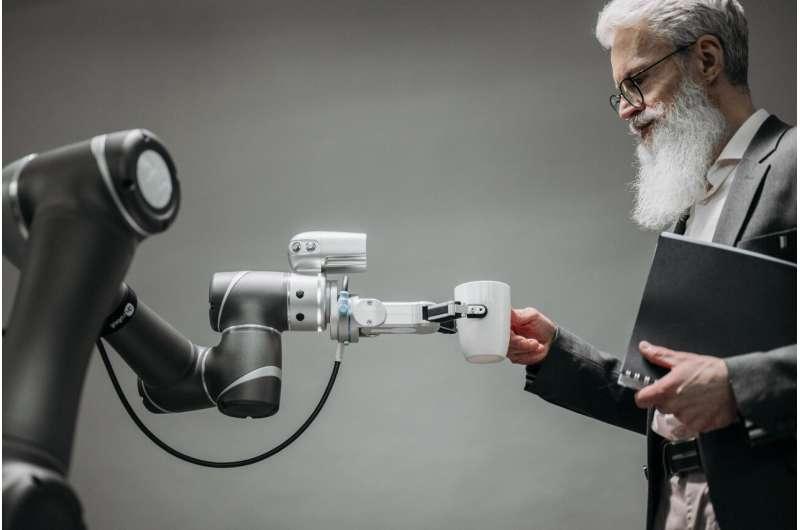
Падающая чашка - сложное предсказаниеПредставьте, что вы тянетесь за чашкой к краю прилавка. Чашка может упасть и разбиться, если вы неправильно рассчитаете расстояние, возьмете ее слишком слабо или будете двигаться слишком быстро.
Для человека взять такую чашку - обычное дело. Однако это простое действие основано на сложной способности предвидеть, что может произойти в следующий момент. Наш разум постоянно пытается быть на шаг впереди, понимая события и их причины. Мы можем предвидеть беспорядок, который может возникнуть в результате перемещения переполненной чашки, или представить, что диван застрянет в дверном проеме, еще до того, как мы его купим.
Эти прогнозы основаны на ожиданиях, которые формируются при взаимодействии с окружающим миром. То, что мы ожидаем, в свою очередь, может повлиять на то, как мы воспринимаем мир и как действуем.
Одна из влиятельных теорий, известная как прогнозирующая обработка данных, предполагает, что восприятие частично работает таким образом. Мозг формирует ожидания, сравнивает их с полученной информацией и вносит коррективы, если они не совпадают.
Давайте вернемся к примеру с чашкой. Представьте, что вы тянетесь к пустой чашке, которая, по вашему мнению, полна. Ваша рука, ожидая увидеть более тяжелый предмет, поднимает его с большей силой, чем это необходимо. Чашка резко поднимается и кажется почти невесомой. Это несоответствие обеспечивает обратную связь, которая помогает скорректировать движение и уточнить вашу оценку ее веса.
То, чего мы ожидаем, формирует наши действия, а то, что происходит дальше, обновляет наши ожидания. Все это происходит просто для того, чтобы взять в руки чашку.
Does AI predict differently?Even for today's robots, reliably manipulating cups can require extensive training and simulation. The challenge involves learning how the physical world behaves and predicting the consequences of an action.
Chatbots using large language models also make predictions, but of a different kind. They learn to predict the next word or fragment of text. This apparently simple way of predicting can nevertheless produce remarkably capable systems able to solve complex problems.
Take the sentence: "A hand bumps a cup near the edge of a table. The cup…" Having learned patterns from enormous amounts of data, a chatbot might continue with "tips over the edge and falls to the floor." It can do so by predicting patterns from a data set and without ever physically handling a cup.
However, being able to describe plausible outcomes does not necessarily mean a chatbot has learned why they happen.
Teaching a robot to anticipateThis is where world models kick in—a broad family of AI approaches that aim to predict how situations evolve and, in some cases, how actions may change them. These models can learn from videos, simulations or recordings of what robots see and do.
For a domestic robot, this could mean anticipating that gripping too tightly might break the cup, or that a wrong movement could tip it over.
Preliminary research shows that, by incorporating actions, motion and sensory information, these systems can help connect predictions with what happens in the physical world.
A world model could eventually make the same predictions we do about a cup. And as it learns from actions and sensory feedback, the resemblance to us may become increasingly hard to ignore. Still, arriving at the same prediction does not tell us what knowledge supports it or how that knowledge was acquired.
Same prediction, same cognition?To us, a cup is not only a cylinder on a table. It can be graspable, breakable, yours, mine, too hot or almost falling. Our understanding connects the cup's physical properties to a network of possible actions and consequences.
Predicting that the cup will fall reveals only a small part of that understanding.
And this understanding develops quite early. Studies suggest that infants just a few months old already have basic expectations about how physical objects behave. Child-development researcher Jean Piaget proposed that children build knowledge through acting on the world. As this knowledge develops, they become able to mentally anticipate consequences without having to carry out each action.
For humans, learning involves more than accumulating information about cups. It involves connecting experiences when reaching for one, feeling its weight, seeing it spill and eventually imagining what might happen without even having to try it.
Using world models, AI can also learn from actions and sensory feedback, in addition to videos, simulations and other data. Like humans, it can learn to interact with the world. The question is how its experiences contribute to the knowledge it builds and uses.
AI could definitely come closer to anticipating what might happen and using that prediction to act. This alone, however, does not show that AI perceives, learns or understands the world as we do.
As AI gets better at replicating the results of human cognition, distinguishing performance from process will only become more important.
This article is republished from The Conversation under a Creative Commons license. Read the original article.
>