‘Я использую искусственный интеллект, чтобы делать то, что у меня плохо получается": Линус Торвальдс о том, почему у него это работает
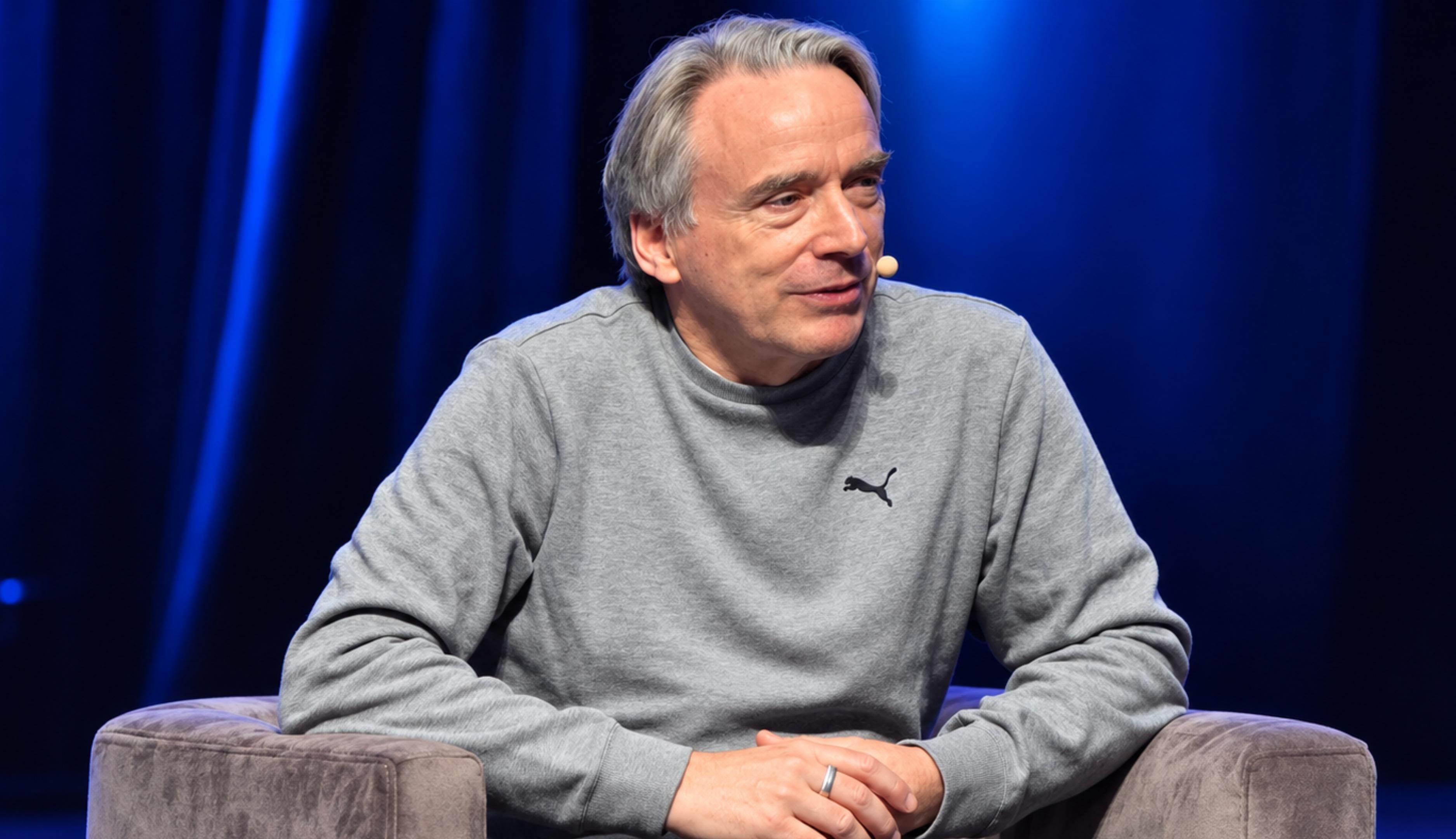
- Торвальдсу нравится, что искусственный интеллект показывает начинающим разработчикам радость программирования.
- Торвальдс рассказал об изменениях в процессе разработки ядра Linux.
- Искусственный интеллект стал жизненно важным компонентом в поиске и исправлении ошибок в ядре Linux.
ПРАГА – Многие разработчики с открытым исходным кодом по-прежнему не любят искусственный интеллект. Последний пример - System76, запретившая контент, созданный с помощью искусственного интеллекта, на своем рабочем столе COSMIC. На Open Source Summit Europe создатель Linux Линус Торвальдс высказал иную точку зрения: "На самом деле мне очень нравится использовать искусственный интеллект", - сказал Торвальд Дирку Хонделю, своему хорошему другу и главе отдела программных технологий Ericsson, в ходе их последней дискуссии.
Также: 5 причин, по которым Linux будет доминировать в настольных компьютерах
Но у этого энтузиазма есть одно отличие, о котором стоит помнить. Использование искусственного интеллекта для того, чтобы сделать хобби-проект более увлекательным, - это одно. Другое дело - ответственное использование ИИ в ядре Linux, где генерируемые исправления и отчеты об ошибках могут ошеломить разработчиков.
Торвальдс сказал: "Я думаю, что вам нужно быть очень осторожным при использовании ИИ, когда вы делаете что-то реальное и важное".
Торвальдсу нравится искусственный интеллект, особенно для новичков"Честно говоря, - продолжил он, - я не очень много занимаюсь программированием ядра. Я занимаюсь сопровождением. Ядро Linux - это проект, в котором реальную работу выполняют другие люди, а я выступаю в качестве сборщика данных. Но я по-прежнему получаю огромное удовольствие от программирования. Я думаю, что искусственный интеллект - замечательный инструмент, если его правильно использовать и относиться к нему как к инструменту, и я нахожу, что он делает программирование намного приятнее."
Торвальдс вспоминал: "Я начал программировать в 1981 году или около того, и тогда компьютеры были намного проще, и вы могли понять, что они делают, а также программы, с которыми вы сравнивали свои собственные, были намного проще".
Также: 6 дистрибутивов Linux без искусственного интеллекта, которые я рекомендую больше всего
"Сегодня все по-другому", - сказал Торвальдс. "Планка в разработке программного обеспечения выросла настолько высоко, что трудно считать, что ваши собственные небольшие усилия чего-то стоят, потому что вы привыкли ко всем этим отточенным профессиональным программам".
"Многие люди смеются над программированием с помощью vibe, но я думаю, что это прекрасный способ найти радость в программировании. Это заставляет вас чувствовать, что вы делаете что-то важное. Это позволяет вам, начинающему программисту, делать то, с чем в противном случае вам было бы очень трудно справиться".
Он продолжил: "Мне нравится концепция искусственного интеллекта как лекарственного средства, потому что я работал над своимown toy project, the guitar pedal, and I knew what I was doing. I had a user interface that I had written myself in C that was running on a microcontroller that was running on this small screen, and I was like, "This is just stupid. It looks like something from the ’80s; I wanted it to look like something from this century. But I don’t do Java. I do kernels."
Also: My 5 favorite Linux distros for security
"So, I use AI to do the things that I’m bad at," Torvalds went on, "I’d seen all the same YouTube videos you have. Give AI a prompt, and it will do it. So I gave it a prompt, and it did it, and it was horrendous. Then I said, ‘Hey, look! I already did this in C. I did it the right way. It’s just ugly."
AI in the Linux kernelThat’s not to say AI isn’t useful for finding and fixing mistakes in the Linux kernel. Hohndel asked about Sashiko, an agentic Linux kernel code review system. Torvalds said its public reviews now appear on the Linux Kernel Mailing List (LKML). Indeed, some subsystem maintainers now expect patches to have received such a review before accepting them.
That doesn’t mean all pull requests have to go through an AI review. Some maintainers do require it, though, and it seems likely that all will eventually require it.
Also: I doubted this mini PC could handle my local AI tasks, but it blew me away
AI tools can identify genuine security problems. They can also surface issues in old, no-longer-used drivers that have gone unnoticed for years. Torvalds sees value in the resulting fixes, while acknowledging their cost. "It is, I think, improving our code base… Although it is also stressing maintainers out to the point that it’s a problem."
As Torvalds said in Mumbai earlier this year. convincing but fabricated bug reports can require substantial human effort to disprove, while narrowly targeted patches may fix one symptom without addressing the underlying problem. Torvalds called some submissions "mindless band-aid kind of patches."
That said, AI code checking is here, and it’s here to stay. For example, Torvalds said, "three-quarters of the preceding day’s Linux Kernel Maintainer Summit discussion concerned making AI generation and review less stressful and more useful. The bottleneck isn’t getting patches. It’s getting useful work through review without exhausting the people responsible for it.
‘Me, myself, and my computer’Because it was Linux’s 35th anniversary, Torvalds also talked about how the process of making Linux has changed over the years. In the beginning, Linux had no development infrastructure at all to speak of. Instead, Torvalds tracked changes through tarball patches and regularly distributed updated source code.
"I made patches every single day internally, and I released them at least weekly," he recalled. "And it actually worked surprisingly well for a small project."
Also: ‘I’m not a programmer’ anymore: Linus Torvalds on the only two tools he uses now
Hohndel noted that the distribution of new tarballs and their accompanying changes continued until 2002, when Linux had become a much larger undertaking. Back in those days, Torvalds said, "It was really just me, myself, and my computer."
His reluctance to adopt existing source-control tools was not simply stubbornness. He wanted developers to work independently, with their own local environments. "I really felt very strongly that everybody should have their own local setup," he said.
As I explained in my 2025 account of Linux’s growth, drawing on Jonathan Corbet’s history of the project, Linux’s openness attracted an expanding development community. But relying on Torvalds to apply incoming patches manually became a bottleneck. Accepting contributions by hand was no longer enough; the project needed a better way to integrate them.
BitKeeper was controversial – and usefulThe BitKeeper version control system provided that improvement, although its proprietary licensing divided the kernel community. Some developers refused to use it. Torvalds, however, found that distributed source control made it substantially easier to merge work from subsystems such as networking and ARM. Torvalds said, "BitKeeper, as far as I’m concerned, was a huge success."
He didn’t consider it flawless. Rather, it showed him what source control could do and helped him identify what he actually wanted. Nor did its adoption require every maintainer to use the same tool.
Also: Linux after Linus? The kernel community’s plan for replacing Torvalds
Then the 2005 BitKeeper licensing dispute took away the tool he had come to depend on. After experiencing distributed source control, returning to the old approach was no longer appealing. Git was Torvalds’ answer.
Hohndel recalled that Torvalds took 11 days to produce the first working version: a new object model, code, and a functioning tool in under two weeks. The early Git was not universally popular. Developers accustomed to CVS found it unfamiliar, and its first versions had rough edges.
Its eventual success still surprises Torvalds. Today, according to a 2022 Stack Overflow Developer survey, Git has become the de facto standard for version control: Nearly 94% of respondents, and almost 97% of professional developers, use Git. All Torvalds wanted was a tool for Linux, not to remake software development everywhere. As he put it, "I sometimes get way too much credit for Git."
After roughly six months, he handed over its maintenance. His point was that the subsequent decades of development belonged to other people, not that the initial work was unimportant. "It’s worth noting that Git today is a lot better than Git in 2005."
The kernel should improve without becoming excitingLinux’s release process underwent another major change, moving away from long-lived, separate stable and development trees toward frequent releases, a merge window, and release candidates.
Under the older model, work accumulated in the development tree while distributions backported desired changes into stable kernels. Releases intended to happen annually could stretch into years, making planning difficult. Torvalds proposed a dramatically shorter cycle. The reaction was not enthusiastic. "People looked at me like I had grown a third head."
Also: Even Linus Torvalds is vibe coding now
His initial five-week target was intentionally aggressive. The process ultimately settled into the familiar nine-to-ten-week rhythm. The result is a development model Torvalds still finds remarkably effective. "We now, for the last 20 years, have a really stable, working model."
He also rejected the idea that Linux should organize itself around dramatic feature launches. "I’m a big believer in the whole incremental small changes that, over time, turn into big features." As he had said this summer in Mumbai, Linux’s development goal remains "incremental improvement and steady progress all the time."
So, while AI is changing Linux’s problem-finding and fixing mechanisms, the name of the game for Linux remains rapid, small improvements to an essential, stable operating system.
>