Познакомьтесь с инженером-антропологом, который обеспечивает надежность своего ИИ-агента
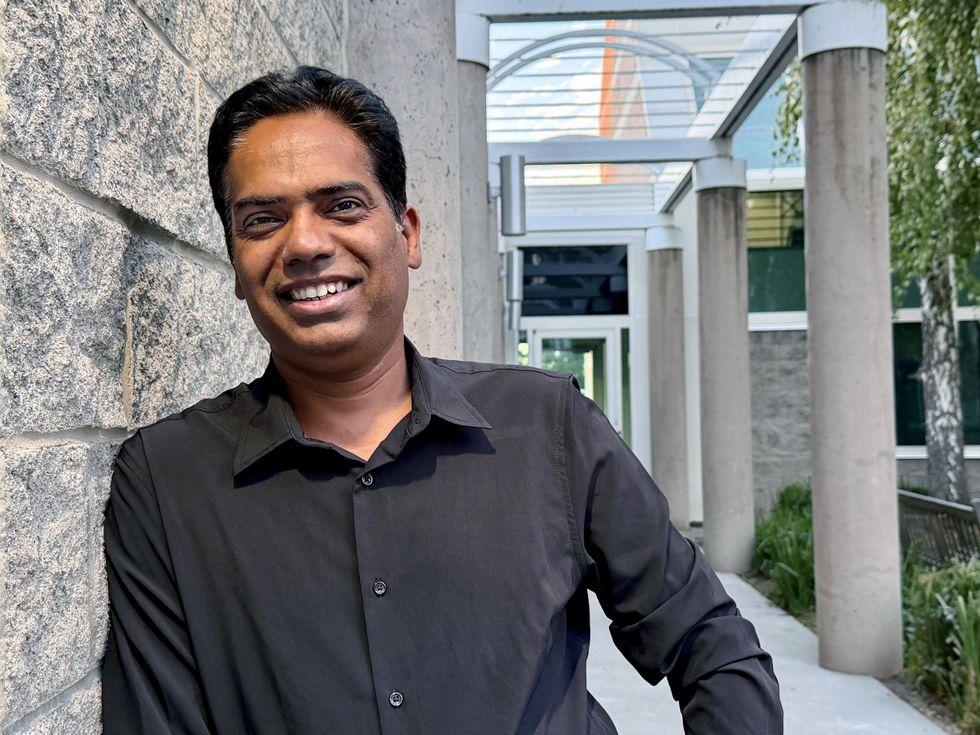
Если вы когда-нибудь задумывались, как Клод и подобные ему агенты с искусственным интеллектом могут отвечать на сложные вопросы за считанные секунды и откуда они получают информацию, то вы не одиноки.
Гурмит Саран работает инженером в Anthropic в Сан-Франциско, исследовательской компании по искусственному интеллекту, которая стоит за Claude, и каждый день пытается найти ответ на этот вопрос. Старший сотрудник IEEE разрабатывает инфраструктуру, позволяющую понять механику, лежащую в основе поведения чат-бота, и гарантировать, что его базовая архитектура обеспечивает надежную работу.
Гурмит Саран
Работодатель
Антрополог в Сан-Франциско
Заглавие
Член технического персонала
Ранг участника
Старший сотрудник IEEE
Альма-матер
Университет Кальяни в Индии; Институт технологии и науки Бирла в Пилани, Индия
"Моя работа заключается в том, чтобы данные были точными, структурированными и заслуживающими доверия, а личные данные оставались конфиденциальными", - говорит он. "Как я понял в начале своей карьеры, конфиденциальность не может быть одним из элементов, на который вы опираетесь, — она должна быть частью архитектуры с самого начала". Если вы не доверяете логике, - добавляет он, - вы не сможете сделать надежные заявления о поведении, а это имеет реальные последствия для безопасности.
По его словам, безопасность является приоритетом для компании Anthropic. Согласно заявлению о миссии Claude, компания хочет, чтобы ИИ-агент был "по-настоящему полезен людям, с которыми он работает, или от имени которых он работает, а также обществу, избегая при этом действий, которые являются небезопасными, неэтичными или вводящими в заблуждение". По словам Сарана, решающее значение для выполнения миссии имеет обеспечение того, чтобы исследователи могли наблюдать и понимать, как ведут себя модели искусственного интеллекта, что особенно актуально для больших языковых моделей.
"У нас есть неплохие инструменты для мониторинга баз данных и веб-сервисов, - говорит он, - но что касается LLM, то мы все еще в процессе разработки".
Решение проблем с качеством данных в Yahoo, Intuit и MetaИнтерес Сарана к вычислительным системам берет свое начало в его детстве в Калькутте, где он проводил столько времени, сколько мог, в школьном компьютерном классе.
"Я помню, как впервые воспользовался одним из компьютеров", - говорит он. "Что меня поразило, так это то, что вы могли написать инструкции, и машина в точности им следовала. Никакой двусмысленности.
"Мне это показалось волшебным".
После окончания средней школы в 1999 году он остался в Индии, чтобы получить ученую степень. В 2004 году он получил степень бакалавра в области электроники и телекоммуникационной инженерии в Университете Кальяни. В 2010 году он получил степень магистра в области разработки программного обеспечения в Университете Кальяни.Birla Institute of Technology and Science in Pilani.
While a graduate student, he began his career in 2007 at Yahoo as a technical lead of the data team in Bengaluru, India. While there, he encountered the project that shaped his career trajectory: working on web analytics and business intelligence reporting solutions.
"We kept running into a frustrating problem," he recalls. "Different teams would calculate the same website metric—something like daily active site users—using slightly different logic, and end up with conflicting answers. It sounds like a small issue, but when leadership is making decisions about resource allocation and product development using that data, not knowing which number is correct becomes a problem."
The team built a central data repository with defined metrics, essentially serving as a single source of truth. Saran created a model that defined what "daily active site users" means, breaking down which events counted, how to handle edge cases (or when standard code fails), and more.
With the new model, data teams across the company could rely on a standard method to determine the number of daily active users for the projects and sites they were responsible for and obtain comparable results using the same logic.
From there, Saran and his team built Yahoo! Digits, an internal web analytics tool used for all the company’s products.
Saran left Yahoo in 2010 to join Intuit as a staff engineer in Mountain View, Calif. He helped build the analytics infrastructure that unified data across the company’s products, including TurboTax and QuickBooks accounting software. During his tenure, Intuit developed a feature that detected fraudulent tax filings in real time. It required Saran and other engineers to build a system to protect taxpayer data while adhering to strict U.S. Internal Revenue Service policies.
"IEEE operates in a lot of countries where engineers don’t have easy pathways into the global professional community. That kind of connection matters as AI development spreads beyond a handful of organizations."
"This taught me that privacy and governance can’t be layers you bolt onto software after the fact," he says. "They have to be part of the architecture from the start."
Saran joined Meta (known as Facebook at the time) in 2016 as a lead software engineer in Menlo Park, Calif. The company was facing controversy over its video metrics: Meta publicly acknowledged an error that caused it to overstate the number of views for posted videos.
"This wasn’t a coding bug; it was an architectural problem," Saran says. He built a system that worked similarly to what he had developed at Intuit, whereby one single truth was defined to govern all video view metrics across the site.
That system, Metric360, eventually became part of the site’s architecture. By the time he left Meta in 2021, he says, Metric360 was being used across the company to calculate video metrics.
He left the company to become a principal software engineer at Wealthfront, a financial services company in Palo Alto, Calif. He helped build the company’s data infrastructure.
Building trustworthy AI systems at AnthropicSaran joined Anthropic in 2025 as a member of the technical staff.
To describe the implications of his work, he uses a medical analogy: "Imagine a doctor is monitoring a patient’s vital signs and making treatment decisions based on those numbers. What if one or a few of the medical devices used were slightly miscalibrated? Even if most readings are fine, it’s a serious problem because the difficult decisions happen in the margins.
"It’s the same with AI systems. My job is essentially to make sure the instruments are giving accurate readings—that the data means what it says it means."
His job comes with high stakes and complex problems to solve.
"AI agents are especially tricky to observe," he says. "When a system is taking sequences of actions [generating conversational responses with different users], you need a way to capture what it did, what information it was working from, and whether outcomes matched what the end user expected. And you have to do all of that without exposing anyone’s private information—the systems are designed to recognize sensitive data and keep it protected as it flows through. It’s a much more demanding observability problem than anything I’ve worked on before."
Solving for system reliability while AI is still in its early days of adoption is both Saran’s passion and the problem that keeps him up at night, he says.
"I think making AI systems genuinely auditable and transparent is one of the more important engineering problems of the next decade," he says, "and it doesn’t get talked about as much as model capabilities do."
IEEE can play a role in shaping AI developmentSaran joined IEEE in March 2025.
"After more than 20 years of building data infrastructure across organizations like Yahoo, Intuit, Meta, and Wealthfront," he says, "I wanted to contribute back to the technical community through peer review, publishing, and engaging with the broader engineering research ecosystem."
He says he believes IEEE can play an essential role in shaping the future of AI through its standards work.
"We have standards for everything, from building codes to software testing," he says. "AI infrastructure needs something similar, and IEEE has the credibility and the reach to do that."
Another problem that IEEE can solve for, he says, is access: "IEEE operates in a lot of countries where engineers don’t have easy pathways into the global professional community. That kind of connection matters, especially as AI development spreads beyond a handful of organizations in a few cities."
>