Гонка ИИ продвигается в космос
Для крупных технологических компаний и аэрокосмических фирм космос может стать следующим рубежом для создания центров обработки данных. Поскольку общественное мнение о центрах обработки данных снижается на фоне растущей обеспокоенности по поводу энергетической инфраструктуры, нехватки воды и ухудшения состояния окружающей среды, размещение центров обработки данных на орбите становится все более реальным.
Питер Белинг - временно исполняющий обязанности заместителя декана по научной работе и профессор Школы наук о данных Университета Вирджинии, где он руководит исследованиями в области искусственного интеллекта в Институте данных и политики национальной безопасности.
Ниже он расскажет, почему крупные компании нацелились на космос, что повлечет за собой размещение центров обработки данных на орбите и что поставлено на карту.
В чем преимущества переноса центров обработки данных в космос?Становится ясно, что спрос на центры обработки данных с искусственным интеллектом растет гораздо быстрее, чем наши возможности по увеличению энергопотребления на местах. Именно это побуждает задуматься о пространстве. Это и другие факторы окружающей среды, связанные с центрами обработки данных.
Главной привлекательностью космоса является, по сути, неограниченное количество энергии в виде солнечной энергии. Если солнечные панели можно будет разместить в космосе, они смогут генерировать энергию из солнечного света независимо от погоды, загрязнения окружающей среды — всего того, что затрудняет выработку солнечной энергии на земле.
Что повлечет за собой размещение центров обработки данных в космосе и что сделает возможной эта технология?Традиционно перемещение больших объемов данных в космос с Земли было очень дорогостоящим процессом. В прошлом ракетные ускорители сбрасывались при взлете корабля, и они падали в океан или сгорали, оставляя очень мало того, что можно было бы использовать повторно.
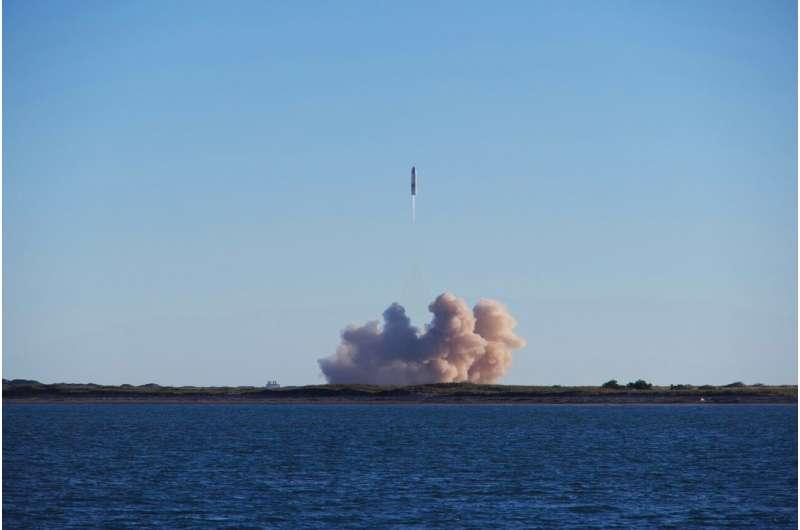
Сейчас SpaceX дошла до того, что ее небольшие ракеты, по сути, полностью пригодны для повторного использования. Они могут взлетать и приземляться — прямо как в кино — вертикально на площадку, и их подхватывает пара механических манипуляторов. И они могут делать это с помощью разгонного блока своей самой большой ракеты под названием Starship.
Starship - это крупнейший проект по запуску ракет и космических аппаратов, когда-либо созданный в истории человечества. И теперь весь Starship, включая ракету-носитель и космический аппарат, находится на грани полного использования.
Если они смогут самостоятельно посадить космический корабль, а также разгонный блок, мы будем близки к тому, чтобы использовать его практически как самолет. Это откроет возможность доставки миллионов тонн грузов на орбиту, что необходимо для создания центров обработки данных в космосе. Это наша цель. Мы можем быть очень, очень близки к этому. Возможно, через год или два.
Если SpaceX создаст ракету многоразового использования, мы увидим, что это окажет гораздо большее влияние на коммуникации здесь, на земле. Они смогут запускать в космос все виды спутников связи, помимо примерно 20 000, которые находятся там в настоящее время.
Eventually, there could be enough satellites to completely cover Earth, to the point where we'll all essentially have satellite phones in our pockets. We won't need to talk to cell towers anymore. Your phone will talk directly to a satellite, and internet traffic will end up floating around space through this great network carrying all of our data.
What security concerns and other issues could arise?You might wonder what happens if something crashes into those satellites. What if someone wanted to take out internet traffic or disrupt all those data centers? Could they do it by blowing up a satellite and creating a debris field that crashes into everything?
And the answer is that with so many satellites, you get a kind of resilience against disruption, whether it's orbital debris crashing into satellites, somebody deliberately targeting and destroying them or even a cyberattack that takes over a fraction of the network.
If you have a communication network that has a million different nodes that traffic flows through, then you have all kinds of ways to reroute traffic on the fly. If you lose some part of the network, disrupting the entire system becomes much more difficult. Cyberattacks that take over software are always a risk, but that kind of risk is also present in all our systems.
There's one other factor to consider: nature. Space is filled with cosmic rays, little bits of radiation traveling through space. Here on Earth, we're protected by Earth's magnetic field, but in space, the chips doing AI work will have a lot less protection. When cosmic rays hit a chip, they can disrupt computations and even change values stored in memory.
That creates another technical challenge, and it's one that people are actively working to solve. There are a number of solutions, and researchers in the UVA School of Data Science have proposals out right now that focus on radiation shielding and resilience of AI in orbit.
The 20th-century space race had a clear finish line: land a person on the moon and return them safely to Earth. As the AI race increasingly extends into space, what would it mean to win?There are two schools of thought. One is that we'll know we've won when everyone in the world is using U.S. models, we've made them open source and everyone's relying on U.S. technology. The other school of thought is: Forget open source. We want to have the best stuff.
My view is that the space race will ultimately be dominated by launch costs. Whoever has the lowest cost will be able to do more in space. And there's more that we can do in space than we can do on Earth, so that's the key.
Right now, there are only three entities that can think about heading down that path: SpaceX, Blue Origin and China. Reusability of the rocket is key, and SpaceX is very, very far ahead of everyone else. Blue Origin is starting to see larger successes, but it has also had spectacular failures. China recently succeeded in landing a small rocket after at least one failure. It's a very difficult proposition. Everyone needs to go through a lot of failures to get to success.
If the U.S. were to win the AI space race, is it possible to win by building systems that are fast and capable but not actually trustworthy? What would that cost us down the line?The whole thing driving the AI race is that there's no fixed point with AI. As we look at one of the current models and start thinking about all the things that we can do with it, we'll come up with something that wasn't imagined before: a new company, a new idea, a new service. We'll use AI for that, and that will create a demand for even more and even better AI. There's a feedback loop: The more useful AI becomes, the more we want to use it.
So how can we test a particular AI model or system and say it will work fine when we can't even imagine all the uses people will put it to in the future? We can try to lock down those uses, but we won't really succeed.
Researchers in the School of Data Science are studying the concept of resilience for AI. Resilience starts with the recognition that these AI models and systems are potentially untrustworthy. What we can do is observe their behavior, put guardrails in place and develop the capability to switch them off or try to limit any damage from inappropriate behavior.
Resilience is a notion you could apply to almost any system. But for AI, the questions are: How do you anticipate how these systems might behave? How can you monitor them? How do you put guardrails and mitigations in place to limit damage if they're not performing the way we want? That's an active area of research with several of our faculty and labs.
As data scientists, we have to be aware that when we learn something, the very act of learning it can end up being exploited. We have a lot of researchers at the school who deal with topics like the ethics of data science and ask: Is there any harm in learning something?
The harm really comes when what is learned is acted upon, and we don't really understand the consequences of that action. It gets into pretty deep philosophy, but it also gets to what makes data science different from other fields. We care about those questions.
>