Ученые ускоряют разработку радиационно-стойких микрочипов для спутников и ядерных реакторов
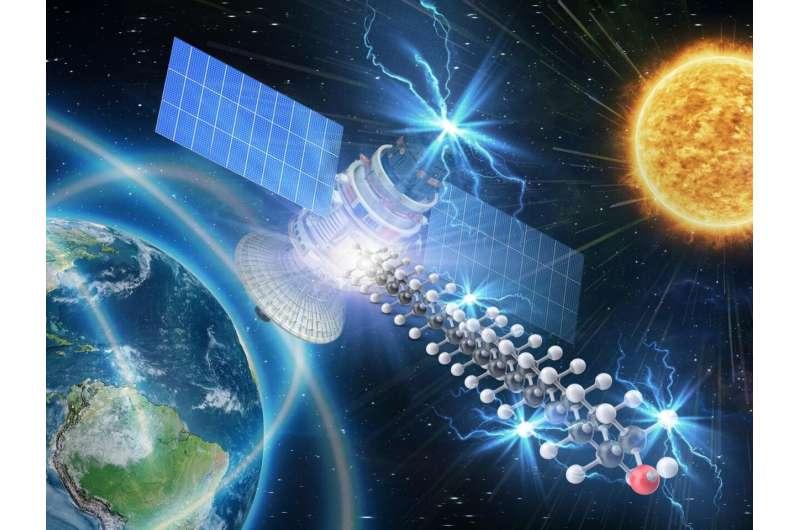
Современные сложные микрочипы - это настоящее чудо, разработанное инженерами, которые втискивают все больше деталей во все более мелкие микросхемы, а затем изготавливают их на сверхчистых заводах стоимостью в миллиарды долларов. Всего одна пылинка или неверный сигнал от такого устройства, как сотовый телефон, могут привести к поломке.
Некоторые из этих чипов займут свое место на борту спутников, которые будут выведены на орбиту Земли на сотни или тысячи миль, испытывая по пути огромное давление, перепады температур и вибрации.
Только тогда возникает реальная опасность: бомбардировка галактическими космическими лучами, тяжелыми ионами, электронами и другими высокоэнергетическими частицами, несущимися со скоростью, близкой к скорости света. В то время как звездочеты могут думать, что космос в основном пуст, за исключением редких проблесков света, каждый квадратный дюйм наполнен буйством молекулярных процессов. Неудачные столкновения микрочипов и микрочастиц могут привести к отключению работы спутника, повреждению его памяти, отклонению от курса или чему-то еще худшему.
Начните практиковать "радиационную защиту": создавайте и испытывайте материалы, способные противостоять воздействию радиации в космосе, на атомных электростанциях и в других экстремальных условиях. Эти "сверхпрочные" материалы делают возможными такие явления, как точные прогнозы погоды, распространение сотовых телефонов по всему миру и использование ядерной энергии для обогрева и охлаждения наших домов.
Ученые из Тихоокеанской Северо-Западной национальной лаборатории используют искусственный интеллект, чтобы ускорить процесс упрочнения материалов для их использования в космосе или в ядерных реакторах.
В мире космической электроники, где на разработку устройств и отправку их в космос могут уйти годы, и еще больше лет уходит на устранение любых недостатков и запуск новых разработок в космос, "быстрее" просто необходимо. Искусственный интеллект и автоматизация лежат в основе усилий.
"Космос - это среда с высокой энергией, где тяжелые ионы и другие частицы бомбардируют наши устройства", - говорит ученый Эрин Баркер. "Нам нужно лучше понять, с каким количеством излучения может справиться чип. Но многие из лучших на сегодняшний день возможностей тестирования разработаны для систем, которым 25 и более лет. Они просто не дают нам информации, необходимой для понимания новейших технологий. Рабочие процессы Agentic появляются в то время, когда требуются более совершенные методы тестирования с использованием rad-hard."
На недавнем северо-западном региональном собрании Американского химического общества в Бойсе ученый из PNNL Дженна Поуп рассказала о работе своей команды по тестированию радиационно-стойких материалов. Команда использовала данные экспериментов, проведенных в Университете Теннесси, где ученые использовали ионный пучок для доставки огромного количества энергии в точные точки на микрочипах. Лабораторные исследования всего за несколько часов имитировали повреждения, которые ионные удары наносят микрочипам в течение многих лет пребывания в космосе.
Then the PNNL researchers deployed AI—specifically, a suite of agents working together as a team through a system called SciLink that was created by PNNL colleague Maxim Ziatdinov and others at the laboratory.
SciLink organizes the AI agents into a hierarchy, with three "project leads" heading experimental analysis, planning and computational simulation. Those three leads delegate tasks to more specialized agents, which report back to the project leads the results and analyses of data from specific research methods, such as atom probe tomography and scanning transmission electron microscopy.
Those instruments look in detail at the carefully placed atoms that make the chips work, then kick out a tremendous amount of data—independent pools of information that can be hard to bring together into one coherent view.
In the experiment, the three lead agents came together in an interactive session to analyze the data, exchanging questions and answers and hypotheses about what the data showed. The three leads interpreted the data, drew conclusions and then proposed new experiments to learn more.
"The system allows us to take into account all the measurements to piece together what has happened, to understand the damage that has occurred and why it happened," said Pope. "It's like having several people who did different forms of testing come together and discuss the results—only it's an agent pulling together the information instantly."
It's as if three human project leads were gathered in a conference room, discussing the results of their teams. One difference is that the AI agents did the analyses much faster, in hours instead of days or weeks. Another difference is that most conclusions were accompanied by a numerical confidence score, a measure of how confident the AI system is in a given conclusion. For example, the system was 90% confident that ions dominated the damage detected in the experiments but only 60% confident in its conclusions about damage caused by protons.
Scientists were involved all the way—bringing decades of experience, knowing what questions to ask, designing experiments and actually doing the laboratory work. Finally, they studied the AI results, looking for "hallucinations," performing calculations to make sure the results made sense and looking for areas of concern. As laboratory experiments become more automated, with AI agents directing research efforts, human oversight is critical.
"Intelligent agents are a tremendous help, but you can't just turn your brain off," said Barker.
The team studied chips made of layers of aluminum gallium nitride and gallium nitride. Such chips are used for critical operations in satellites, communications, power systems and radar systems. Getting those chips ready for launch and beyond is critical. An unplanned delay because electronic components cannot stand up to space radiation can translate to a mission being postponed or even scrubbed entirely.
"Radiation hardening is critical for satellites that will be up for a decade or more, such as large communications satellites," said nuclear engineer Ben Kowash, who leads PNNL's radiation-hardening efforts. "You can protect your electronics by adding shielding, but that adds weight. You can add backup systems in case one fails. But for every bit of weight, power capacity and complexity that you add, you are adding costs and reducing the efficiency of the mission. Making sure the electronics can stand up to the radiation they will be facing can be much more effective."
>