Пока мир обсуждает риски, связанные с искусственным интеллектом, Китай сокращает технологический разрыв с США
Поскольку стремительное развитие искусственного интеллекта вызывает новые дебаты о связанных с ним рисках, Соединенные Штаты и Китай продолжают разрабатывать все более мощные модели.
США опередили Китай и другие страны по возможностям создания моделей искусственного интеллекта, исследованиям, цитируемости и другим областям. Китай быстро становится сверхдержавой в области искусственного интеллекта, несмотря на то, что введенные США ограничения лишили Китай доступа к некоторым из самых передовых технологий, включая новейшие чипы и станки для их производства.
Эксперты и в недавних отчетах, таких как доклад Стэнфордского института искусственного интеллекта, ориентированного на человека, говорится, что Китай стал противовесом США в области искусственного интеллекта, и в этом году, похоже, теряет лидерство США.
"Разрыв между американской и китайской моделями невелик и хрупок", - сказал Сэмм Сакс, старший научный сотрудник Института перспективных международных исследований Школы Джона Хопкинса, занимающегося Америкой, Китаем и будущим глобальных отношений.
Но и США, и Китай также выражают растущую обеспокоенность по поводу искусственного интеллекта. Нынешние дебаты приобретают все большее значение в преддверии ожидаемого в этом месяце визита председателя КНР Си Цзиньпина в Вашингтон для встречи с президентом США Дональдом Трампом, и, как говорят эксперты, будущее искусственного интеллекта будет в значительной степени зависеть от того, что Китай и США будут делать, а чего не будут делать.
Вот краткий обзор некоторых наиболее важных китайских моделей искусственного интеллекта и проблем, вызывающих озабоченность как в Вашингтоне, так и в Пекине:
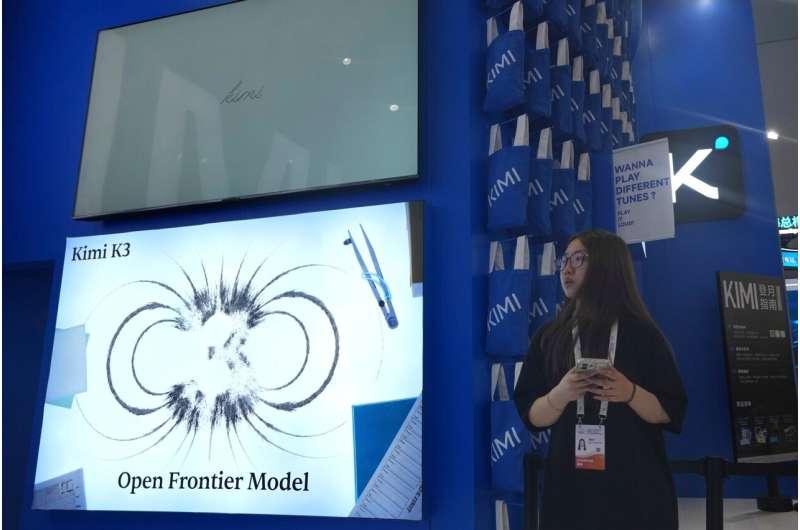
Moonshot AI составляет серьезную конкуренцию китайским компаниямПекинский стартап Moonshot AI произвел настоящий фурор, выпустив Kimi K3, который удивил Кремниевую долину возможностями, близкими к американским конкурентам. В июле, вскоре после выхода, он занял 3-е место в мировом рейтинге model intelligence, уступив Claude Fable 5 от Anthropic и GPT-5.6 Sol от OpenAI, по данным платформы искусственного интеллекта Artificial Analysis. Но Kimi K3 сейчас занимает девятое место, уступая новым передовым моделям от Anthropic, OpenAI, Meta и SpaceXAI, что указывает на то, что лидерство Китая в области искусственного интеллекта может быть изменчивым.
ИИ-стартап darling DeepSeek первым перевернул мировые фондовые рынки, доказав, что китайские ИИ-модели способны конкурировать с американскими. Модель R1 компании, выпущенная в начале 2025 года, оказалась более экономичной, чем аналогичные американские модели. В апреле DeepSeekpreviewed its powerful V4 model, saying it has big improvements in knowledge, reasoning and "agentic" capabilities, referring to the ability to plan and execute complex steps autonomously, under limited human guidance.
The powerful GLM-5.2 from startup Z.ai that rolled out in June raised Silicon Valley eyebrows with comparisons to the most advanced Anthropic and OpenAI models. Z.ai then launched GLM-5.3 in August with improved coding and agentic capabilities that pushed it up the global AI model rankings.
In July, China's Alibaba previewed its Qwen3.8-Max model, which the tech giant said was its most powerful model in the series, challenging Anthropic's Claude and OpenAI's GPT.
China worries about AI risks to security and governanceIn China, the head of its state security ministry has warned artificial intelligence poses a range of potential threats to the country, from political and ideological security to cyberattacks, data leaks and even challenges to governance.
In an article published Sunday, Chen Yixin said the technology could threaten China's political, institutional, and ideological security if used by "hostile forces and individuals with ulterior motives."
Some individuals might use AI-generated deepfake audio and video to create "political rumors" on a massive scale, he wrote.
Chen specifically mentioned the capabilities of Anthropic's Claude and OpenAI's GPT as examples of how AI could be used to more easily identify and "weaponize" cybersecurity vulnerabilities. He warned certain nations and groups can now "execute complex hacking tasks."
Top Chinese leaders have said China should accelerate AI development and pursue technological self-reliance. But they also noted the need to control the risks and establish a global framework for AI governance.
US accuses China of extracting American model capabilitiesIn the U.S., Trump and his administration have repeatedly highlighted the importance for the U.S. to maintain its AI edge over China. "Whoever wins AI, wins," Trump told reporters on Sunday.
The U.S. has accused China's AI developers of engaging in what it has called "industrial-scale distillation," in which AI models are trained to copy or imitate the capabilities of more powerful ones. Last week, Anthropic also accused Chinese startups DeepSeek and Moonshot of routing a number of their user requests to its Claude AI models.
In the most comprehensive report by the government to date, the FBI, the National Security Agency and the Cybersecurity and Infrastructure Security Agency said Sept. 8 that Chinese AI developers extracted capabilities from some of the most advanced AI models in the U.S. in "aggressive, malicious, and targeted distillation activities."
Beijing has rejected the claims and said distillation is commonly used by many AI companies. It asked the United States to refrain from making "unfounded accusations" and accused the U.S. of pursuing a "monopoly of the AI industry."
The U.S. allegations "should be read as a contested claim" but not as the explanation for China's catch-up, said Professor Will Cong of Nanyang Technological University in Singapore.
The United States has put in a lot of energy controlling the inputs into frontier AI, especially chips, said Lizzi C. Lee, a fellow at the Asia Society Policy Institute's Center for China Analysis. But now "it may also have to think about the outputs of frontier AI as a form of technology transfer," she said.
"The U.S. labs spend enormous amounts of compute pushing out the frontier. But Chinese developers can learn from those systems," said Lee. "And Chinese companies then (can) release very capable open-weight models that spread globally."
© 2026 The Associated Press. All rights reserved. This material may not be published, broadcast, rewritten or redistributed without permission.
>