Что робототехнические компании думают о запрете использования иностранных роботов в США
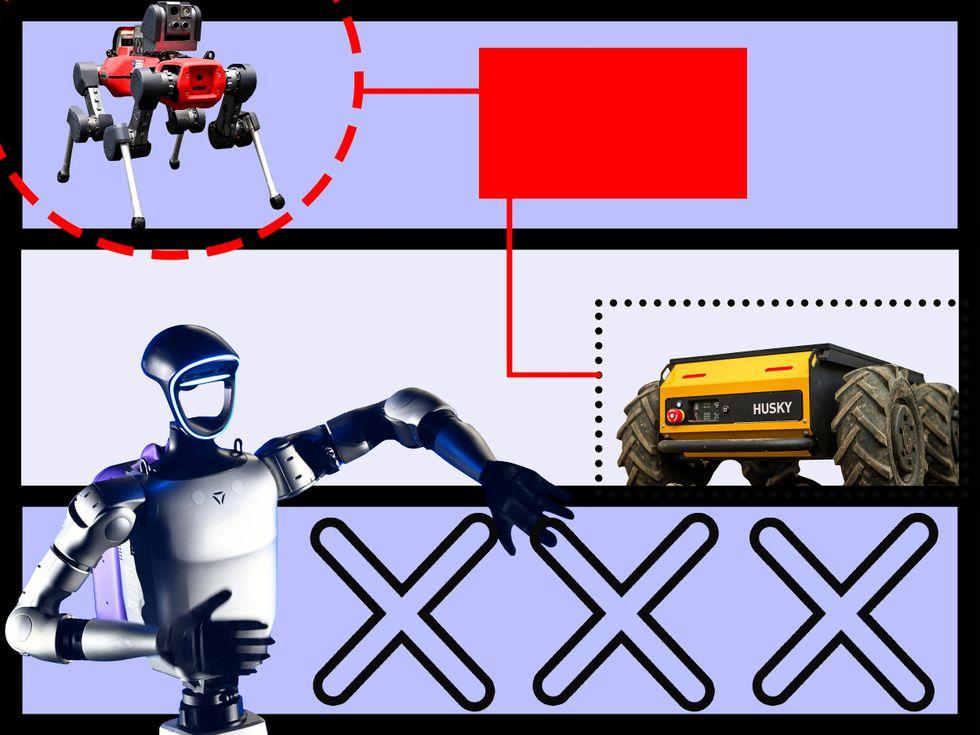
"Закрытый список" Федеральной комиссии по связи США (FCC), первоначально опубликованный в 2021 году, определяет коммуникационное оборудование и услуги, которые, по его словам, представляют угрозу национальной безопасности. 28 июля FCC добавила в список мобильных коммуникационных роботов весом более 2 килограммов и инверторы, обычно используемые в солнечных батареях, что означает, что новые продукты из любой зарубежной страны в этих категориях больше не подлежат импорту.
Этот шаг является продиктованным Министерством обороны расширением разрозненных федеральных усилий по дальнейшему ограничению доступа США к потенциально чувствительным китайским технологиям, но он может привести к серьезным изменениям в индустрии робототехники и в союзных странах.
В заявлении FCC говорится:
Все передовые роботизированные устройства иностранного производства представляют неприемлемый риск для национальной безопасности Соединенных Штатов и для охраны граждан США... если только [Министерство обороны не определит, что] данное передовое роботизированное устройство иностранного производства или класс таких устройств не представляют такой опасности.
Здесь есть два важных определения. Первое - это что такое "передовое роботизированное устройство", а второе - что означает "неприемлемый риск". Дроны уже прошли свой собственный этап регулирования такого рода, поэтому они освобождены от этого конкретного ограничения, как и подключенные транспортные средства и медицинские устройства. По мнению FCC, "продвинутые роботизированные устройства" - это мобильные системы, которые включают в себя бортовые датчики и средства связи и обладают некоторой степенью автономии. Есть несколько лазеек, включая системы весом менее 2 килограммов и любые системы, которые обмениваются данными со скоростью менее 200 килобит в секунду, что открывает некоторые творческие возможности. Важно отметить, что это относится к новым устройствам; те, которые уже сертифицированы, не ограничены в продаже или использовании.
Что касается рисков, то правительство США заявляет, что зарубежные передовые роботизированные устройства представляют собой "угрозу кибербезопасности, которая угрожает безопасности критически важной инфраструктуры и, следовательно, безопасности граждан США". По-видимому, в обосновании есть два основных момента, приведенных в приложении С. Первый заключается в том, что мобильные роботы важны как для экономики, так и для вооруженных сил, поэтому Соединенным Штатам нужна собственная цепочка поставок и промышленная база, а не полагаться на иностранных производителей. И, во-вторых, мобильные роботы следят за критически важной инфраструктурой в уязвимых местах, что создает угрозу их безопасности.
Страна, название которой не следует РазглашатьВ рамкахits justification for why foreign robots are a security risk, the DOD cites IEEE Spectrum’s article on a critical vulnerability in robots from Unitree, based in Hangzhou, China, along with several other news articles and reports about Chinese robotics. And despite the FCC swearing up and down that this action is "country neutral" and "not targeted at any country or countries," U.S. national security sources told Spectrum that the perceived threat is obviously China. That’s how China feels about it, too, per a Chinese Ministry of Commerce 29 July press conference (translation of the first quote here):
On the surface, the FCC’s measures fly the banner of "non-discrimination," but in substance they discriminate against and suppress Chinese enterprises and products…China firmly opposes the U.S. overstretching the concept of national security and going after Chinese companies. Protectionism does not make the U.S. more competitive and will only hurt the interests of U.S. companies and consumers. China will continue to do what is necessary to firmly defend the legitimate and lawful rights and interests of Chinese companies.
It’s unclear what China is going to do about this—but how about the rest of the world? How can foreign companies that make advanced robotic devices get them cleared for FCC authorization? Among many, many other things, you’ll need to provide "a detailed, time-bound plan to establish or expand manufacturing in the United States for the advanced robotic device."
Because China also produces a large fraction of robot components, even for robots assembled in the United States, it will have strong leverage in any related negotiations until U.S. robotics companies further diversify their supply chains.
RELATED: Proposed Chinese Robot Ban Is Latest U.S. Tech Sovereignty Move
Applicants must also submit their applications to the DOD and FCC by 1 January 2028, which is unfortunate for anyone who wants to develop an advanced robotic device after that point.
Robotics Industry ReactionsThis is all very new, and reactions from the robotics community have been mixed.
Some American robotics companies may benefit in the local market from the newfound lack of competition in the commercial market. Brendan Schulman, Boston Dynamics’ vice president of policy, wrote an enthusiastic endorsement of the ban on LinkedIn: "I sense that this is just the first round in a series of policies that will define the success and growth of the industry for decades to come." On the other hand, third-country buyers may just stick to Chinese products, as they generally have for drones and electric cars.
But not all companies expect major changes from the new regulation. American customers "need to know they can audit the technology, get support quickly, and keep the system operating without depending on a fragile overseas supply chain," Nic Radford, the CEO of the U.S. humanoid robotics company Persona, tells IEEE Spectrum. In other words, he figures some customers wouldn’t have wanted Chinese humanoids anyway.
Philipp Frey, vice president of strategy for the Swiss quadruped company ANYbotics, agrees. He says their enterprise customers in the United States "increasingly evaluate robots on long-term reliability, cybersecurity, software capability, safety certification, serviceability, and ecosystem integration, not on hardware cost alone."
ANYbotics also plans to apply for conditional approval of future products, Frey says. That will involve a national-security review by the DOD or the Department of Homeland Security, disclosing company beneficial ownership, supply-chain risks, and declaring a plan for establishing a significant manufacturing presence in the United States.
Gavin Kenneally, CEO of the U.S. quadruped company Ghost Robotics, is more explicit about the risks that Chinese robot strategy poses to the United States. "Active and purposeful spyware is deployed inside the U.S. on Chinese robots. Examples of predatory pricing abound. And this isn’t just a competition between U.S. and Chinese robotics companies; it’s between private U.S. companies and China’s coordinated national strategy," Kenneally tells Spectrum. "If today’s announcement encourages stronger cybersecurity and a more level competitive environment, that’s good for customers and good for the robotics industry."
So is an industry-wide ban the best way to guard against threats? American approaches to Chinese technology security risks have been "ad hoc and fragmented," wrote the Brookings Institution sociologist Kyle Chan in a report published 9 July. Chan called for the Bureau of Industry and Security, part of the Department of Commerce, to centralize federal information gathering and decision-making on how to handle risky foreign devices. He also called for better public input mechanisms for these issues, and a continuous, proportionate process that tightened or relaxed targeted import restrictions in response to well-defined risks.
That would allow American industry to continue benefiting from partnerships with Chinese manufacturers in less sensitive links of the supply chain, Chan argues. Those links will evolve over time, requiring continued assessment, but without those partnerships, crude bans "could make it more difficult for American startups and researchers to develop new software and end up slowing innovation across the U.S. robotics ecosystem," he writes.
>