Главный исполнительный директор Артур Киулян о принятии более эффективных решений с помощью искусственного интеллекта
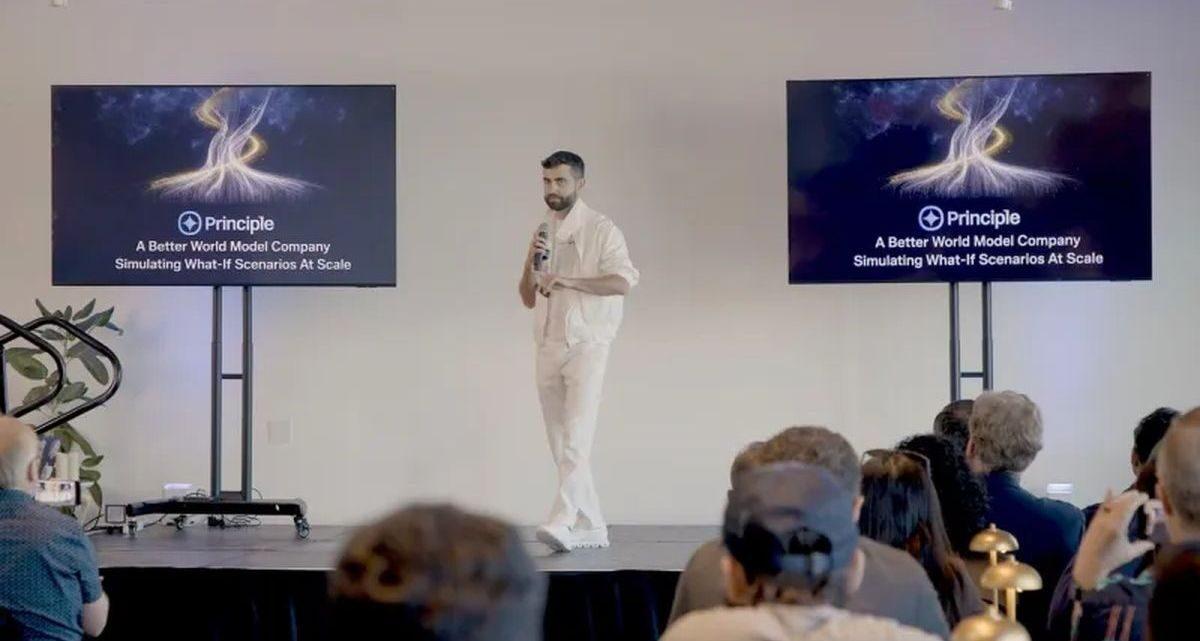
Искусственный интеллект упростил компаниям автоматизацию работы, проведение анализа и ускорение продвижения. Артур Киулян, генеральный директор Principle, утверждает, что скорость и производительность сами по себе мало что говорят о том, принимает ли бизнес более эффективные решения.
Принцип подходит к проблеме с другой стороны. Вместо того, чтобы полагаться на один прогноз, компания моделирует множество вероятных вариантов будущего, включая то, как конкуренты, регулирование, технологии, инфраструктура и рынки капитала могут отреагировать на стратегический шаг. Цель состоит в том, чтобы помочь организациям проверить, какие решения остаются устойчивыми при изменении их допущений.
В этом интервью Киулиан рассказывает о том, почему внедрение ИИ часто оценивается с помощью неверных показателей, как компании могут проводить стресс-тестирование крупных инвестиций, почему распределение капитала выходит за рамки обычного прогнозирования и что следует учитывать руководящим командам, если они хотят, чтобы ИИ улучшал качество решений, а не просто ускорял их выполнение.
Большое вам спасибо за то, что присоединились к нам. Прежде чем мы перейдем к теме, расскажите, какая проблема в том, как компании принимают стратегические решения, побудила вас в первую очередь задуматься о принципах работы?Спасибо, что пригласили меня. Период полураспада стратегического решения сократился, но способ, которым компании принимают эти решения, не сильно изменился.
В основе большинства стратегий по-прежнему лежит один и тот же процесс: сбор исторических данных, формирование предположений, составление прогноза, выбор направления и ежеквартальный пересмотр. Проблема в том, что рынки движутся по-другому: конкуренты реагируют, регулирование меняется, технологии сближаются, капитал перемещается, и каждый из этих сдвигов влияет на другие так, что линейная модель не может это отследить.
Я ясно увидел это, работая над системами в условиях высокого давления. Полезным вопросом редко был "Каков наш наилучший прогноз?" Вместо этого был "Что остается хорошим решением, если наш прогноз неверен?"
Это стало основой принципа. Мы не пытаемся свести неопределенность к одному ответу. Мы моделируем среду, в которой принимается решение, — действующих лиц, силы, зависимости, возможные реакции — и проверяем, как это решение будет действовать при изменении условий.
Мы не пытаемся предсказать будущее. Мы составляем список возможных вариантов будущего, а затем помогаем организациям разрабатывать решения, которые будут эффективны в этих условиях.
Все оценивают, насколько быстро компании внедряют ИИ. Как вы думаете, почему так мало людей оценивают, действительно ли это приближает бизнес к достижению его целей?Я считаю, что мы путаем деятельность с использованием ИИ и создание ценности с помощью ИИ.
Внедрение легко измерить: приобретены места, отправлены приглашения, автоматизированы рабочие процессы, сэкономлено время. Эти цифры хорошо отображаются на информационной панели. Но они говорят о том, насколько широко ИИ внедрен в организацию, а не о том, стала ли организация лучше достигать того, для чего она существует.
Рассмотрим две компании. Одна из них автоматизирует 40% своей внутренней работы и сокращает операционные расходы на 15%. Другая практически не меняет показатели производительности, но использует искусственный интеллект, чтобы обнаружить, что запланированные инвестиции в размере 200 миллионов долларов зависят от предположений, которые не оправдываются в наиболее вероятных рыночных условиях.
Which one got more from AI? We donʼt have a good enterprise metric for the second company yet.
The next measurement problem is decision quality: did AI improve which bets we made, how much capital we put behind them, when we changed course, and how quickly we recognized that an assumption was no longer true? Thatʼs harder to measure than adoption. Itʼs also much closer to what leadership actually cares about.
What are companies getting wrong when they try to measure the business value of AI today? Are productivity and cost savings actually telling leaders enough?Productivity measures the cost of doing something. It doesnʼt measure the value of choosing to do it. If AI reduces the cost of producing a market-entry analysis by 80%, thatʼs useful. But if the underlying market-entry decision destroys $100 million in capital, the efficiency gain becomes almost irrelevant.
So I think we need to start asking about value per decision, not just output per employee. Did we choose the right market? Did we sequence investments correctly? Did we identify a risk before it became expensive? Did we allocate capital toward something that holds up under several possible futures?
The first wave of enterprise AI was measured in seats, usage, and hours saved. The next one should be measured by the quality and resilience of the decisions it helped companies make.
Youʼve built more than 65 startups and worked on systems used in high-pressure environments. How has that changed the way you think about making good decisions under uncertainty?Building more than 65 companies gives you a pretty large dataset of being wrong.
And thatʼs actually useful. You start noticing that failures rarely happen because nobody had enough data, or because the team couldnʼt execute. More often, an assumption that looked perfectly reasonable at the start stopped being true — and the organization noticed too late.
Working on AI systems connected to the White House COVID response made this more acute. Information was incomplete, conditions changed fast, decisions had real consequences, and waiting for certainty wasnʼt an option. Working on decision-support infrastructure during the full-scale war in Ukraine reinforced the same lesson, harder.
It changed how I define a good decision. It isnʼt one that produces exactly the outcome you predicted, but the one that remains defensible across a range of outcomes, makes its assumptions explicit, and gives you signals for when you need to change course.
Thatʼs closer to engineering than prophecy. You donʼt design a bridge for one perfect set of conditions. You stress-test it and understand where it breaks. Strategy should work the same way.
Companies have more data, forecasts and analysis than ever. Why hasnʼt that made them proportionally better at strategic decisions? Where does the gap usually appear?The reason is that most enterprise intelligence is built for observation, not intervention.
Dashboards tell you what happened. Forecasts estimate what might happen next. Generative AI is making both dramatically cheaper to produce. But most strategic decisions are closer to causal questions: if we do X, how does the system around us respond?
If we enter a new country, what does the incumbent do? If we acquire a competitor, how does the market consolidate? If everyone deploys AI agents, where does the next constraint appear?
We saw this clearly in a New York Tech Week simulation we ran. We modeled the enterprise AI market through mid-2028 across 123 plausible timelines, 74 digital twins, and 19 market forces. In 110 of those 123 timelines, power and infrastructure emerged as the binding constraint — not models, not chips.
Thatʼs a second-order effect. AI demand drives compute demand; compute drives power demand; physical infrastructure eventually caps AI expansion. A dashboard can show you each of those signals separately. The harder problem is understanding how they interact — and what that means for a decision youʼre making now.
When a company faces a decision it canʼt easily reverse, what should it be testing before committing?Iʼd try to kill the strategy before approving it. Teams naturally build business cases to show why an investment should work. For a high-consequence decision, I want the opposite: identify the minimum set of assumptions required for it to work, then systematically try to break them.
What if demand arrives 18 months late? What if a competitor responds twice as quickly? What if regulation changes? What if financing gets more expensive? What if the technology commoditizes faster than planned?
Then I look for two things: fragility and optionality. How easily does the strategy break when an assumption shifts? And if weʼre wrong, how expensive is it to change course?
The strongest strategy isnʼt necessarily the one with the highest upside in the base case. More often, itʼs the one that holds up across very different environments without creating an irreversible downside.
What does looking at many plausible outcomes change compared to working from one forecast or a handful of scenarios?It changes what youʼre optimizing for: with one forecast, you optimize for accuracy; with many possible futures, you can optimize for robustness. The latter is more useful for strategic decisions.
You donʼt necessarily need to know exactly what 2030 looks like. You need to know whether the $300 million decision youʼre making today still makes sense across several credible versions of 2030. It also lets you find what Iʼd call decision invariants — constraints, opportunities, or strategic choices that keep surfacing across very different futures.
Thatʼs what made the New York Tech Week result meaningful. We werenʼt saying "this exact AI future will happen." We generated 123 plausible timelines. When infrastructure constraints kept appearing across radically different paths, that recurring pattern became more useful than any individual prediction.
Sometimes the strongest signal isnʼt the most probable future. Itʼs the thing that refuses to go away across many different ones.
Why do capital allocation decisions expose the gap between having more intelligence and actually making a better decision?Capital allocation is where strategy stops being theoretical. A company can hold ten different views about the future. The moment it deploys $500 million, hires or cuts 1,000 people, or spends three years building something, it has effectively revealed which future itʼs betting on.
The problem is that most capital allocation models are heavily internal. They model our revenue, our costs, our growth assumptions, maybe a sensitivity range. But the world doesnʼt sit still while you execute that spreadsheet.
Competitors respond. Suppliers gain leverage. Regulation changes. Technology arrives. Customers adapt. Capital moves elsewhere. Those second- and third-order effects can matter more than the original assumption.
So the interesting question for AI isnʼt "Can it make the business case more accurate?" but rather "Can it expose what has to be true for this capital allocation to work — and show us what happens when those assumptions collide with a changing world?"
Thatʼs a harder bar. Most tools arenʼt built for it yet.
Was there a moment while building Principle when you realized the real problem wasnʼt helping companies see more possible outcomes, but helping them understand which decisions move them toward their goals?Yes — since at some point you realize that more futures can become just another form of noise. You can simulate 10,000 scenarios and still leave an executive with the same problem: "Fine. What should I do?" The shift was connecting those futures to an objective.
Two companies looking at exactly the same future can rationally make completely different decisions, because theyʼre optimizing for different things: one wants cash flow, another wants market share; another wants strategic optionality.
MacPaw made this concrete for us. They needed to understand how to sequence growth across five product lines over 24 months. We mapped more than 500 strategic directions, ran 480 scenarios, and modeled 90 market actors. The strategy that maximized short-term revenue wasnʼt the one that produced the strongest long-term valuation multiple.
That distinction matters. The simulation can show you the futures — but you still need to decide what "better" means for you. Thatʼs when the problem becomes much more interesting than forecasting.
If adoption isnʼt the right measure, what should companies measure instead? How can a leadership team tell whether AI is actually moving the business toward the outcome it wants?Start with something surprisingly basic: write down the decision, the objective, and the assumptions before AI touches it. Otherwise itʼs very easy to move the goalposts afterward.
If youʼre investing in a new market because you believe it will increase enterprise value over five years, record that. Record the assumptions behind it and record what would invalidate them as well. Then use AI to keep testing those assumptions as the world changes.
This creates something enterprises are surprisingly bad at maintaining: decision memory. Six months later, leadership shouldn’t only ask whether the KPIs are green but also question the relevance of the assumptions that made them pick this strategy.
Over time, you can measure something more meaningful than adoption: how often AI helped you identify a broken assumption earlier, avoid a weak allocation, or change course before the financial impact became obvious. Thatʼs the feedback loop I think enterprise AI is still missing.
Can you give an example where the option that looked strongest initially turned out not to be once wider consequences were modeled?The MacPaw work is a good example of how sequencing changes the economics — which is a subtler problem than most capital allocation frameworks are built to catch.
What we found was that the same company, same team, same product portfolio produced materially different long-term value depending on which moves happened first and how the market responded.
The lesson for capital allocation is this: executives often compare investments as if theyʼre independent choices — A versus B versus C. In reality, choosing A changes the environment in which youʼll later decide whether to do B. Strategy is a sequence. And thatʼs also why this didnʼt end as a one-off exercise. Principle became an always-on intelligence layer for MacPaw, with market signals continuously tracked and the model re-simulated as conditions change.
Could AI make companies more efficient at moving in the wrong direction? How does leadership prevent that?I think this could become one of the defining management problems of the next few years. AI is collapsing the cost of execution. Analysis that took a week takes minutes. Software that took months takes weeks. Teams can test more ideas, generate more campaigns, evaluate more opportunities. Thatʼs overwhelmingly useful.
But thereʼs another side to it: the cost of executing a bad strategy is collapsing too. Historically, organizational friction was an accidental safety mechanism. Some bad ideas died because they were simply too expensive or too slow to implement. AI removes part of that friction.
So the cadence of strategy has to catch up with the cadence of execution. If your organization can execute ten times faster but still revisits strategy once a year, youʼve created a real asymmetry: while your execution engine is running in real time your direction-setting mechanism is still on an annual clock.
The answer isnʼt to slow AI down but to make strategy more continuous: monitor assumptions, revisit decisions when important signals change, and keep asking two separate questions — "Are we executing this well?" and "Should we still be doing this at all?"
If you had to give a CEO one question to ask before approving a major AI or strategic investment, what would it be?"What would have to be true for this to be the wrong decision?" Not "Whatʼs the ROI?" You already have a model for that. I would ask what youʼre implicitly betting on: which customer behavior has to continue; which competitor has to stay passive; which regulation has to remain unchanged; which technology has to mature on schedule; which capital assumption has to hold.
Then I would ask which of those assumptions you can actually monitor. Because every strategy is, in some sense, a portfolio of assumptions dressed as a plan. The advantage doesnʼt come from being right about all of them — thatʼs impossible. It comes from knowing which assumptions matter most, and seeing when they break before everything else does.
>