Когда у искусства искусственного интеллекта нет автора: исследование показало, что сгенерированные изображения часто нельзя связать с обучающими данными
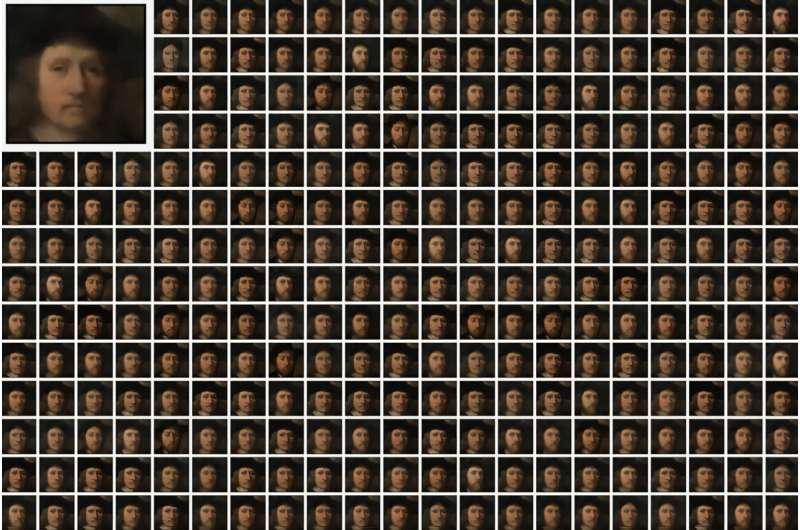
Когда генератор изображений с искусственным интеллектом создает портрет, чья работа была вложена в него? Этот вопрос стоит в центре судебных исков, лицензионных соглашений и предлагаемых нормативных актов по всему миру. Художники хотят признания. Компании хотят ясности. Политики хотят найти способ распределить ответственность.
Новая работа группы исследователей из Лаборатории компьютерных наук и искусственного интеллекта Массачусетского технологического института (CSAIL) предполагает, что для моделей, обученных на больших наборах данных, на этот вопрос часто может не быть ответа. Дело не в том, что инструменты для его поиска неадекватны. Сама связь исчезла.
Ученые выявили явление, которое они называют снижением атрибуции, когда чем на большем количестве данных обучается генеративная модель, тем меньшее значение имеет любой отдельный обучающий пример для любого конкретного результата. Это кажется нелогичным, но они обнаружили, что в достаточно больших масштабах часто можно удалить любое отдельное изображение из обучающих данных, или каждое изображение данного художника, или каждую фотографию данного человека, и сгенерированная выборка не изменится.
И если удаление чего-либо ничего не меняет, утверждают исследователи, то нельзя сказать, что оно несет за что-либо ответственность.
"Если вы удаляете часть данных, а выходные данные модели не меняются, значит, эта часть данных не повлияла на выходные данные", - говорит Чжэн Дай, 21-летний доктор философии, 24-летний бывший исследователь MIT CSAIL и ведущий автор работы. "Таким образом, нет особого смысла привязывать выходные данные к этому фрагменту данных. И если затем вы проделаете это по очереди для всех остальных фрагментов данных и обнаружите, что выходные данные также не изменились ни для одного из них, то нет особого смысла приписывать выходные данные какому-либо одному из них."
"Все предыдущие методы были приблизительными", - говорит профессор Массачусетского технологического института Дэвид Гиффорд, главный исследователь MIT CSAIL. "Они действительно не могли однозначно показать, что удаление отдельных элементов не изменило результат. В этой статье представлен первый метод, который является абсолютным. Фактически вы удаляете исходные данные и все, что на них влияет. Это первый точный метод, позволяющий эффективно выполнять масштабное удаление и показывающий, что результаты не меняются."
Проект Дая и Гиффорда описан в статье, опубликованной в открытом доступе в журнале Nature Communications.
Проблема переподготовкиTesting this idea directly meant answering a what-if question. What would this model have produced if it had never seen this particular image? Answering it honestly means retraining the model from scratch without that image, then doing it again for the next image, and the next. With millions of training examples, the math quickly becomes prohibitive, which is why prior work in the attribution field has relied on approximations that estimate a training example's influence, rather than actually removing it.
Their workaround is an architecture they built themselves, called a "diffusion ensemble." Instead of one monolithic model, it's made up of many smaller components, each trained on a different slice of the data. Want to know what the model would do without a particular image? Just switch off the parts that saw it. No retraining, no approximation. What's left is a true counterfactual model, not an estimate of one.
Of course, a clever architecture only matters if it still works as a generator. So the team put the ensembles head-to-head with 24 conventional diffusion models trained on the exact same data. The images came out looking about as good by standard measures.
One nice surprise in the numbers: The more training data, the better the ensembles held up against their single-model counterparts, a hint that they may actually be more data-efficient.
"When you have low amounts of data, they do very poorly," says Dai. "But if you have more data, it actually scales better compared to the vanilla diffusion model."
Exploring a counterfactual universeWith ablation working, the researchers could finally ask their question at scale. Take one generated image, then imagine every alternate version of it, each produced by removing a different piece of the training data. The team calls this the image's counterfactual universe. The distance between the original and its most different alternate, the counterfactual radius, captures the most that any single piece of training data could have mattered.
They trained 24 ensembles on datasets from 256 images to more than 160,000, pulled from seven public collections including CIFAR-10, CelebA, MetFaces and ArtBench. The pattern was consistent: The bigger the training set, the smaller the radius, shrinking along an inverse power law. It held whether differences were measured pixel by pixel or by semantic meaning, with statistical significance in both measures.
The team also stress-tested their own result. Maybe ablation itself was the culprit? They redid it the brute-force way at small scale, training 1,282 separate models, and the decay showed up anyway. Maybe bigger datasets just make each removal proportionally smaller? They pinned the removed fraction in place, and it persisted. Fixed epochs, text-prompted models, class-conditioned models, four similarity metrics—the finding survived everything.
The privacy paradoxThe implications run in a direction that surprised the researchers themselves.
Gifford sees the finding as bearing directly on the legal question of whether model outputs are derivative works.
"One way to think about this is that these models are creative. They are not simply copying what they are fed, but creating brand new outputs. If those outputs have nothing to do with any individual piece of training data, that raises questions about fair use, about whether the outputs are themselves copyrightable as novel works, and about how authors get compensated when what comes out of a model isn't attributable to anything on the internet."
Gifford also notes that the work shows how to produce outputs that are guaranteed to be unattributable, a capability he frames as an obligation for the industry, rather than a loophole.
"In order for these companies to claim their outputs aren't derivative of the internet in a copyright-infringing way, they need to revise their models to take advantage of the advances in this work, so they can show they're not creating derivatives of individual people or items."
The work looks at diffusion models, now dominant in audiovisual media generation and prevalent in scientific applications including protein structure modeling and therapeutic discovery. Whether the same decay holds for the large language models at the center of the highest-profile copyright litigation is still an open question.
"If attribution worked, it would reliably tell us whether similarities between a model's output and a copyright-protected work are due to copying or coincidence," says James Grimmelmann, a law professor at Cornell Law School and Cornell Tech. "But this paper provides reason to think that attribution will fail for interesting models. Instead, technologists and courts will need to resort to other methods for assessing copying."
This story is republished courtesy of MIT News (web.mit.edu/newsoffice/), a popular site that covers news about MIT research, innovation and teaching.
>