Sceye доставит плавучую вышку сотовой связи в Японию для создания тестовой сети 4G
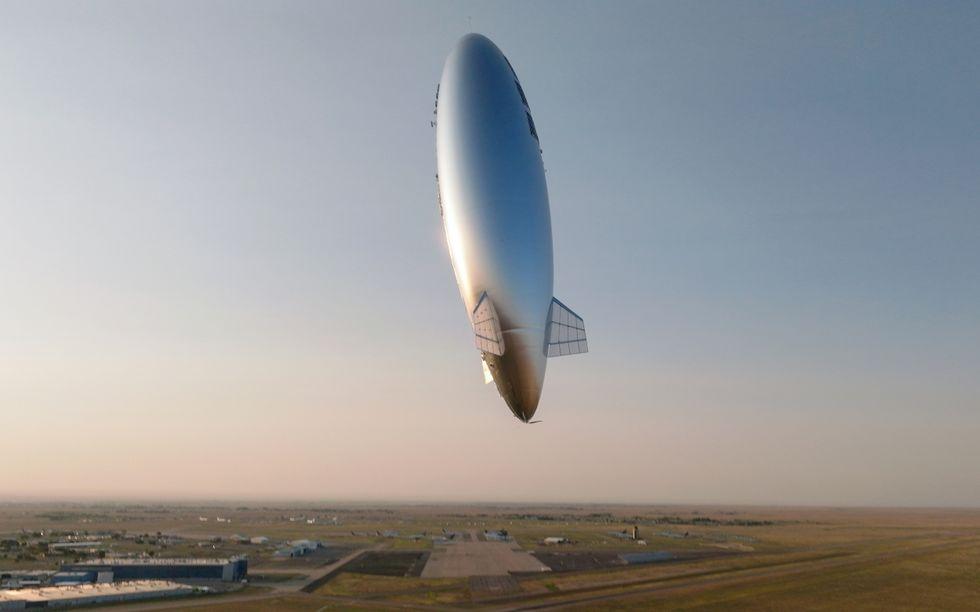
Предоставление беспроводной связи с неба было мечтой ряда коммерческих предприятий, таких как закрытый Google Project Loon. Теперь японский телекоммуникационный гигант SoftBank стал на шаг ближе к продаже услуг телефонной связи с неба. В партнерстве с американским аэрокосмическим стартапом эта пара недавно отправила беспилотный самолет на солнечных батареях легче воздуха через Тихий океан, чтобы обеспечить покрытие территории Японии сотовой связью.
Первый полет Sceye в Азию из Нью-Мексико в Японию и обратно состоялся в августе и сентябре. Аппарат преодолел почти 30 000 километров в стратосфере за 30 дней. Находясь над японским островом Сикоку, платформа легче воздуха выполнила маневры по удержанию станции у юго-восточной оконечности острова и протестировала работу своей сети.
Платформа Sceye оснащена антенной SceyeCell, которая работает как вышка сотовой связи в небе. Компания заявляет, что ее система высотных платформ (HAPS) может охватывать площадь, эквивалентную площади 500 наземных вышек сотовой связи.
Испытания имитировали сильное землетрясение в тектонически активном регионе у юго-восточного побережья Японии, называемом Нанкайской впадиной.
"Мы подтвердили, что производительность связи, эквивалентная наземным сетям, может быть достигнута при минимизации помех существующим наземным базовым станциям", - говорит Масаюки Камимура, старший директор технологического подразделения SoftBank.
Исследователи сообщают об успешной передаче видео, голоса и текстовых сообщений со смартфона на базовую станцию balloon, эквивалентную стандарту 4G LTE, подключенную к наземной сети сотовой связи SoftBank. Технические специалисты также протестировали связь с дроном через платформу SceyeCell. Сеть, основанная на HAPS, передавала данные об управлении беспилотником, его местоположении и видеосигналах, имитируя ситуации, связанные с разведкой и обеспечением снабжения в случае стихийного бедствия, а также отслеживая деятельность и движение транспорта в пострадавших районах вокруг места бедствия.
"В будущем мы планируем создать трехмерную коммуникационную сеть, объединяющую наземный, HAPS и спутниковый уровни", - говорит Камимура.
Каково будущее высокогорных сетей связи?HAPS are attractive not only for their maneuverability but also their proximity to Earth, compared to satellites. HAPS cut the lag time for a signal’s round-trip travel, compared to satellite connectivity networks like SpaceX’s Starlink, making a possibly critical difference in applications such as real-time robotic control.
SoftBank aims to start selling HAPS services in 2027. It expects demand in Japan, where mountains sometimes make continuous coverage difficult to maintain, while earthquakes can sometimes take down the networks that exist.
SoftBank and Sceye’s flight is the latest round in a race between helium-filled craft and winged aircraft. Helium craft are cheaper to build and can carry more solar panels, batteries, and equipment. But lighter-than-air craft are also harder to steer, and so far winged craft have flown longer. (Within the lighter-than-air category are airships and balloons; airships tend to operate their own propulsion, while balloons tend to drift with the wind.)
By contrast, fixed-wing platforms require energy-draining propulsion to stay aloft. Last year, a Airbus-owned Zephyr fixed-wing uncrewed aircraft reportedly stayed aloft for a record-setting 67 days.
"Our lift capacity is moving towards over 200 kilograms, with today’s fixed wings only carrying around 5 kg," says Jonathan Wilson, Chief of Mission Operations, at Sceye. "It makes a world of difference in what you can offer, from broadband connectivity to persistent Earth observation."
Guided from the ground by satellite, Sceye’s solar-powered ST1 craft chose different routes across the Pacific on the way out and the way back.SoftBank
What are the Biggest Challenges for HAPS-Based Telecom?Tim Farrar, wireless industry consultant, of the Menlo Park, Calif.-based TMF Associates, says each of the competing HAPS platforms must negotiate a delicate balancing act between maintaining sufficient power and battery life on a very light platform and having enough mass and power budget left to usefully operate its payload.
"Improved battery technology—that is, better power to weight—is the most critical aspect here in enabling these platforms to operate outside tropical regions and in wintertime when the amount of sunlight is lower," Farrar says.
Craig Mascarenhas, head of engineering research at Stratospheric Airborne Climate Observing System at Harvard University, is co-author of a recent ACS Energy Letters study on the battery needs of HAPS. He found that emerging batteries could improve feasibility for fixed-wing solar platforms, but commercialization depends on a wider set of variables, including autonomous reliability, launch and recovery logistics, and of course economics.
"For telecom end users, if HAPS become part of networks, the most visible change may be less about noticing a new technology and more about connectivity being available where it currently is not," Mascarenhas says. "But the user experience—speed, latency, reliability, and cost—would depend heavily on the payload, spectrum, backhaul, network integration, and business model."
Sceye, meanwhile, says it’s planning its next flight for Peru, where the company will also test broadband internet connectivity.
"We’ve now completed over 25 flights, and the focus is shifting from innovating the platform to scaling," Wilson says. "The next chapter is making HAPS a normal part of our infrastructure, as familiar as ships in ports or trains on tracks."
SoftBank and Sceye’s trial also tested other challenges for HAPS platforms, including edge computing in the stratosphere. When data processing was clocked on a server mounted on the balloon, communication latency was reduced by more than 40 percent compared to processing in the cloud via the internet, according to Kamimura. HAPS edge computing could be used for applications including physical AI and real-time video analytics, he added.
"I don’t understand the importance of that for typical users," Farrar says. "What communications tasks are mainly being undertaken locally within a single HAPS platform? Maybe it is relevant for local netted battlefield communications or some such, but probably not your average consumer."
Another test involved using a ground-based laser to track the HAPS and receive signals from an onboard reflector. Lasers would allow a HAPS system to be tracked from the ground or from satellites in space and precisely determine its position, but the technology is also relevant for future optical wireless links such as free-space optical (FSO) communications.
>