Может ли Агентурный ИИ вернуть американское производство обратно?
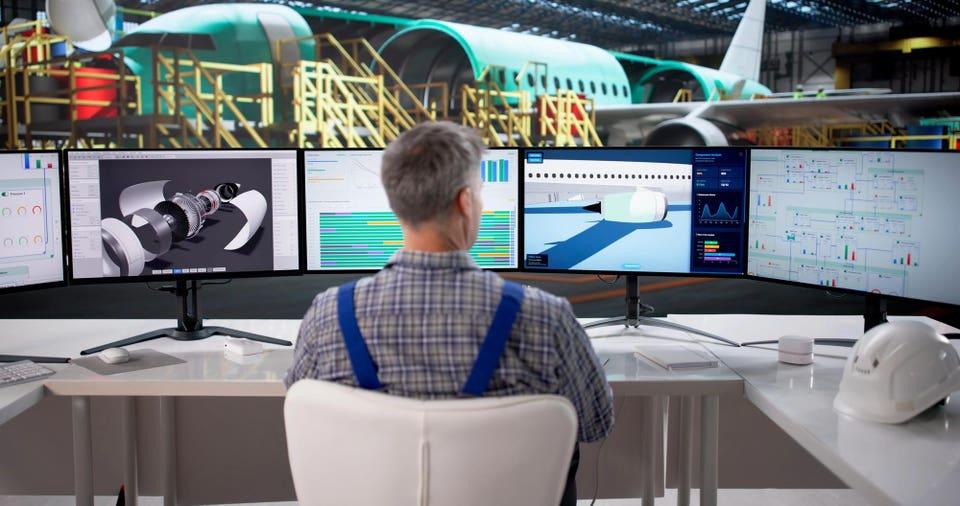
Аэрокосмический и промышленный секторы США сталкиваются с острой нехваткой квалифицированных инженеров, что приводит к возможному переводу на периферию и задержкам проектов. Этот дефицит кадров усугубляется культурным сдвигом в пользу программного обеспечения, а не физических дисциплин. P-1 AI предлагает решение с помощью "Archie", инженера-агента по искусственному интеллекту, призванного дополнять человеческие команды, а не заменять их. Archie выступает в роли младшего сотрудника, повышая производительность, сокращая время цикла и повышая конкурентоспособность. Эта модель взаимодействия ИИ и человека также может решить проблему нехватки квалифицированных кадров в строительстве и здравоохранении. Эксперты считают, что такие инструменты ИИ могут сделать отечественное производство более экономически жизнеспособным, потенциально перестраивая производство и восстанавливая конкурентоспособность американских инженеров.
Представьте, что поставщик авиационной техники получил хорошую новость, которой он ждал долгие годы: заключение крупного контракта на реактивный самолет нового поколения. Этот проект - тот самый шанс, который ему нужен, чтобы выйти из кризиса в плюс. Проблема в том, что производитель не нанимает достаточного количества инженеров, чтобы взяться за это дело. Ему приходится либо переносить работу за пределы предприятия, либо растягивать сроки поставки.
Проблема с нехваткой персоналаХотя эта история вымышленная, головоломка, которую она описывает, очень реальна. В Америке просто не хватает квалифицированных инженеров, чтобы удовлетворить спрос.
Аэрокосмический сектор ощущает эту нехватку. "Члены наших корпораций говорят нам, что недостаточно людей, изучающих инженерное дело, чтобы занять рабочие места в будущем", - говорит Вики Сингер, старший директор по развитию доходов и корпоративному членству в AIAA, крупнейшем в мире техническом сообществе, посвященном глобальной аэрокосмической профессии", - сообщает Aerospace America.
Согласно тому же источнику, после COVID количество компетентных инженеров сократилось. Ожидается, что утечка талантов только усилится по мере того, как пожилые работники и менеджеры перестанут выполнять свои нынешние обязанности.
Джефф Иммельт наблюдал за этим сокращением крупным планом. Как бывший председатель правления и главный исполнительный директор General Electric, сменивший Джека Уэлча, он может вспомнить эпоху, когда инжиниринговые фирмы могли нанимать и удерживать самых талантливых специалистов, необходимых для поддержания процветания отечественной промышленности. Больше нет, сказал он мне в интервью.
Иммельт, венчурный партнер New Enterprise Associates (NEA), недавно вошел в совет директоров P-1 AI, Inc., стартапа в области разработки искусственного интеллекта для промышленных команд, который только что объявил о первоначальном завершении раунда финансирования серии A стоимостью 50 миллионов долларов. Я поговорил с Иммельтом и соучредителем и генеральным директором P-1 AI Полом Еременко, который ранее был техническим директором Airbus, о том, как инвестиции в капитал, технологии и персонал могут дать толчок развитию инженерной базы Америки.
Both Immelt and Eremenko pinpointed misguided incentives as contributors to the problem. Eremenko sees a cultural element at work. "As a society, we said software engineering is where it’s at. Mechanical, electrical, aerospace and industrial engineering have not been glorified as sexy disciplines. And so kids who are inclined toward STEM chose software versus physical forms of engineering, and as a result we lag in our industrial workforce as a country." In other words, America stopped producing the kinds of people who produce things.
Enter artificial intelligence.
An AI Teammate, Not An AI ReplacementP-1 AI believes it’s possible to restore domestic production by marrying human teams with machine smarts in the form of Archie, an Agentic AI engineer for mechanical, electrical, thermal and systems design. Eremenko describes Archie less as a software product and more as a hire. "In general, engineering teams are five to 10 people," he explained. "Our thesis is there should be one Archie per team. We're not suggesting that there should be teams that are entirely Archies, or even a team that's half Archies. Archie is the junior guy on every team."
"The idea of plugging in a technology enhancement tool right alongside an engineer, doing side by side tasks for the purpose of doing it faster, more economically, fits the workflow of how companies think about designing products," Immelt added.
The Goal: Doing More with LessWhile P-1 AI is focused on data center engineering, automotive and aerospace and defense, the overall notion of an AI stepping in to provide a layer of intelligence on top of human workers dovetails with my recent Forbes article describing how agents can also assist with warehouse productivity, specifically streamlining the factory quoting process that is so integral to profitability and yet so time-consuming.
There’s another element at play here that connects with my other recent coverage, specifically a concept I dubbed the Micro-Enterprise Model with applications to GE of all companies. Back in the twentieth century, when this corporate leviathan reigned supreme, size was a proxy for power. The more people you employed, the more capable your organization became at executing complex operations.
Agentic AI changes that calculus, as Archie demonstrates. In the 2020s, aerospace firms like the hypothetical version above needn’t strain under a lack of personnel. Instead, tomorrow’s engineering outfits can boost human acumen with AI teammates. "By fitting naturally into how engineers collaborate, P-1 AI can shorten cycle times, improve competitiveness and deliver measurable results in mission-critical environments," Immelt said in a statement announcing the round.
Manufacturing Isn’t the Only Industry To BenefitThe precedent of multiplying human productivity in this way is already visible. Engineering isn’t the only field suffering from a lack of human talent. "The construction industry needs to attract an estimated 349,000 net new workers in 2026 to meet demand for construction services," reports LBM Journal, citing a proprietary model from Associated Builders and Contractors. Already, several solutions exist in the market that echo Archie’s teammate-for-the-trades model, including Drawer AI, which supports electrical contractors with items such as "device counting, branch routing, and wire sizing, producing detailed quantity reports and layouts in minutes," according to BuiltWorlds.
Likewise, it is well known that America suffers from a shortage of nurses, a deficit poised to worsen as so many Baby Boomers require increasing healthcare services. Hospitals are rolling out AI scribes to provide a similar human and machine synthesis to fill the gap.
As the American Hospital Association reports, "A recent study published in JAMA found that AI-powered ambient scribes modestly decreased total electronic health record (EHR) time by 13.4 minutes and documentation time by 16.0 minutes across five academic medical centers. The sites included in the study utilized Ambience, Nuance Dragon Ambient eXperience (DAX) Copilot (the predecessor to Microsoft Dragon Copilot) and/or Abridge along with Epic as their EHR system."
Bringing Manufacturing Back OnlineReturning to the challenge of onshoring American engineering, Immelt is bullish for the future, thanks to the boon of AI teammates. "Much of the outsourcing over the last few decades was a wage arbitrage play," he explained. Tools like Archie homogenize the wage piece, restoring the business case for building domestically. "If I were a CEO today, I would be confident that I could make whatever I wanted, wherever I wanted to make it, thanks to AI. And if your largest market is the U.S., that is where you will want to make your product."
We can imagine a scenario in which the aviation supplier from our story and other firms needn’t turn away or delay work, now aided by an artificial intelligence layer. In that future, teams may still resemble those of today, only each possesses an AI teammate. Eremenko predicts such hybrids could reshore some of America’s engineering competitive advantage while expanding "our bandwidth as a species to design the physical world: the megacities, the rocket ships, the space data centers and eventually the starships." The sky is the limit.
>