Вопросы возникают вокруг новой интеллектуальной системы искусственного интеллекта FAA, хотя официальные лица заявляют, что никакой связи с наземной остановкой нет
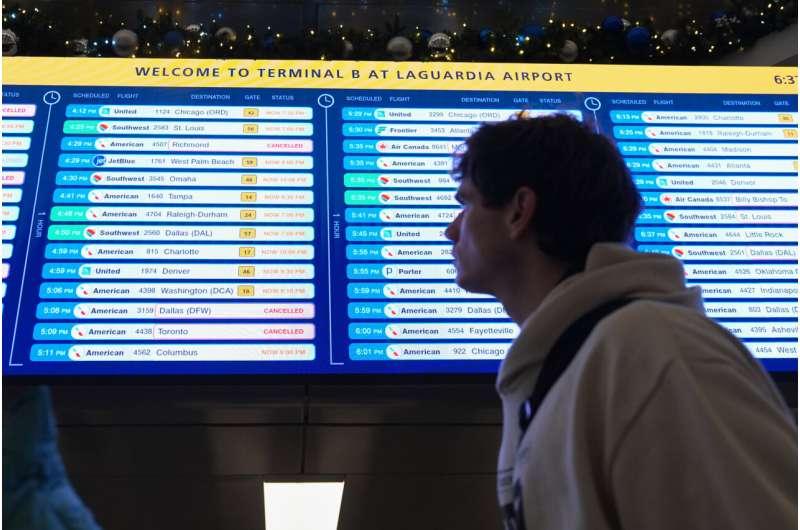
По словам правительственных чиновников и компании, занимающейся искусственным интеллектом, которая стоит за этой технологией, наземная остановка авиакомпании, которая привела к хаосу в путешествиях с пятницы, не была связана с новой системой FAA на базе искусственного интеллекта стоимостью 875 миллионов долларов, которую агентство внедряет, чтобы помочь прогнозировать проблемы в небе.
Но сроки наземной остановки, которые совпали с национальным внедрением интеллектуальной системы Федерального управления гражданской авиации, вызвали вопросы о том, что делает эта система, ее преимуществах и рисках по сравнению с существующей системой управления персоналом и какие существуют меры предосторожности для решения потенциальных проблем.
Официальные лица заявляют, что нет связи с наземной остановкойИНТЕЛЛЕКТУАЛЬНАЯ система базируется в одном месте недалеко от Вашингтона, где команда экспертов анализирует расписание рейсов, прогнозы погоды и сотни других потоков данных. Затем это ведомство направляет рекомендации в командный центр FAA, который передает их авиадиспетчерам по всей стране для рассмотрения.
Министр внутренней безопасности Маркуэйн Маллин заявил в пятницу, что нет никаких признаков того, что проблемы со связью, вызвавшие остановку наземного транспорта, связаны с новой компьютерной системой, и высшие должностные лица Министерства транспорта и FAA подтвердили это в субботу.
Компания Air Space Intelligence, или ASI, разработавшая систему, заявила, что остановка самолета на земле не была вызвана "интеллектуальной системой, каким-либо продуктом ASI или нашей интеграцией с FAA и ATC".
Но законодатели и сторонние группы подняли вопросы об интеллектуальной системе перед пятничной остановкой. В прошлом месяце демократы Палаты представителей направили письмо в Управление по подотчетности правительства США с просьбой провести аудит нового программного обеспечения, выразив обеспокоенность по поводу безопасности и ограждений.
"Вызывает беспокойство тот факт, что сотрудники национальной службы авиационной безопасности, занимающиеся вопросами безопасности полетов, по-видимому, практически не участвовали в разработке SMART и получили ограниченную подготовку и информацию в ходе текущего процесса развертывания", - говорится в письме от 13 октября. "Использование искусственного интеллекта в SMART по праву вызвало серьезные вопросы о его надежности и преимуществах в плане безопасности, особенно о его потенциальной возможности вмешиваться в процесс принятия решений опытными авиадиспетчерами или искажать информацию, критически важную для безопасности полетов".
Однако SMART — по крайней мере, пока — не создан для того, чтобы ИИ отвечал за управление полетом. Скорее, он дает рекомендации людям, которые это делают.
What is the SMART system?Transportation Secretary Sean Duffy and FAA Administrator Bryan Bedford unveiled the system in September, calling it a "cutting-edge tool that centralizes 200 data streams—including weather patterns, flight paths, traffic flow and controller staffing metrics—into one platform." SMART stands for Strategic Management of Airspace, Routes and Trajectories.
The system's AI-supported engine synthesizes the data systems and shows a "comprehensive visualization" of where planes are going, how much traffic the system can handle and where congestion or weather could cause problems, according to the announcement. The idea is for specialists to then use the platform to fix problems before they arise.
The FAA says that during the initial test of the system in the Washington area this fall, the system helped reroute 180 flights and saved an average of 10 minutes and 80 gallons (303 liters) of fuel per flight by diverting around weather or other issues. The agency said that one flight cut 42 minutes off its trip from Tampa, Florida, to Dallas thanks to the system's recommendations.
So SMART was expanded for use nationwide on Nov. 10 for the airspace of all 22 air traffic control centers. That was three days before the ground stop.
According to a government fact sheet on the tool, SMART can predict where air traffic is headed and identify other routes before an area becomes too congested. The system can also help reopen restricted airspace faster and better manage airport arrivals.
SMART is also supposed to help with weather-related issues faster.
Currently, the FAA blocks off portions of airspace affected by weather as "large, rectangular boxes," according to the fact sheet, which doesn't reflect how weather actually looks, with quick-moving thunderstorms and storm systems that are "often irregular in shape, with narrow gaps or corridors that aircraft could safely fly through."
To help with this, SMART gives the FAA and airspace operators a "clearer picture of how weather will affect air traffic over time," allowing air traffic controllers to plan around storms and use available airspace instead of unnecessarily shutting down large areas.
No other country has a working AI air traffic tool like the SMART system, according to Michael McCormick, a former FAA airspace manager and an associate professor at Embry-Riddle Aeronautical University. Eurocontrol, the European air traffic authority, has a system in testing and several manufacturers are prototyping similar tools.
Concerns around relying on AIWhile government officials and ASI, the company behind SMART, have stressed that its AI system is designed to assist humans and not run flight control, its deployment has raised concerns about relying on artificial intelligence when human lives are at stake, given that even the most advanced models are prone to hallucinations—when models fabricate false information and present it as fact.
Mike O'Donnell, a former top FAA official who worked for the agency for 17 years and now does aviation safety consulting work, said the agency "has got to make sure that this is just a tool in the toolbox and not the actual machine that's doing the work."
The FAA, he said, "cannot afford to be wrong on this."
"It's good to use it with the proper guardrails and backstops to ensure that they're not giving wrong information to controllers based on what (AI) has come up with," O'Donnell said. "There's got to be a way to verify and validate what it's doing to make sure that it's not the wrong information."
He cautioned against putting too much trust in AI "until we know for sure that it's proven itself time and time again. And that's going to take a while."
The AI system's launch comes amid a longstanding shortage of air traffic controllers around the country. The National Air Traffic Controllers Association has been raising concerns about this for more than a decade, telling Congress in 2015 that the shortage was at a crisis level. It said then that the FAA had missed its hiring targets for five years in a row. The union represents about 14,000 controllers, roughly 3,000 of them trainees.
That said, experts say no AI system can replace the human air traffic controllers who spend years training for this highly demanding and stressful job.
In an October interview with NPR, ASI co-founder and CEO Phillip Buckendorf said the SMART tool is designed for traffic managers who manage the entire U.S. airspace.
"The AI does the math, the AI does the computation," Buckendorf told NPR, but it's ultimately up to the human operator whether to take the system's recommendation. "They make the decision, they are the decider, they are the judge."
© 2026 The Associated Press. All rights reserved. This material may not be published, broadcast, rewritten or redistributed without permission.
>